















Quick answer: An NTRP rating describes your tennis playing level. NTRP stands for National Tennis Rating Program, the USTA system used to help organize level-based competition. If you already play USTA tennis, check your official record. If you are new, use the USTA self-rating process.
You can hit a great forehand and still struggle to win a service game. So which version of your tennis determines your level?
That is why an NTRP rating is useful: it puts your overall game into context.
This guide explains the numbers, shows you where to find yours, and helps you turn the result into a focused practice plan.
- Use an official USTA record for competition eligibility.
- A level chart helps you understand your game; it does not award a rating.
- Assess the shots you repeat during points, including returns and second serves.
- Choose one recurring match problem to improve before adding more power.
What Is an NTRP Rating?
An NTRP rating is a measure of playing ability. The USTA describes adult levels from 1.5 to 7.0 in half-point steps, such as 3.0, 3.5, and 4.0.
The purpose is to help players find suitable competition. See the USTA introduction to NTRP ratings.
A rating describes your playing level. A ranking describes your position on a competitive list. A 4.0 rating does not mean you rank fourth in your club.
NTRP Rating Chart: What the Levels Mean
Use this condensed guide for orientation. These summaries follow the official NTRP level descriptions. They are not a points-based test.
| NTRP level | General playing profile |
|---|---|
| 1.5 | Learning to put the ball in play; very limited experience. |
| 2.0 | Developing contact, strokes, and basic court positioning. |
| 2.5 | Can rally slowly with peers; movement and recovery remain inconsistent. |
| 3.0 | Fairly steady at medium pace; direction and depth remain unreliable. |
| 3.5 | Controls direction on moderate balls; needs more depth and variety. |
| 4.0 | Controls direction and depth on both sides; uses transition shots effectively. |
| 4.5 | Varies spin and pace; builds tactics around strengths and weaknesses. |
| 5.0 | Anticipates well, attacks short balls, and finishes points reliably. |
| 5.5 | Uses pace or consistency as a weapon; adapts under competitive pressure. |
| 6.0–7.0 | National or top collegiate experience at 6.0; world-class play at 6.5–7.0. |
Some charts include 1.0 for someone just starting tennis. The USTA adult guidance linked above begins at 1.5. For registration, use the level recorded through the official process.
How to Find Your NTRP Rating
If You Already Have a USTA Account
- Sign in on USTA.com.
- Open the user menu and choose Profile.
- Look in Personal Info → About for your adult NTRP rating.
The USTA player-profile instructions show the current navigation. If the rating says “Not Set,” follow the linked self-rating instructions.
You can also use Find NTRP Rating Info on TennisLink to search by player name, USTA account number, or team number.
Follow the official TennisLink lookup guide if you need help locating the search.
If You Are New or Returning to Competition
Start with the USTA adult self-rating guidance. New players and players with expired ratings may need to complete its questionnaire. An informal estimate from a friend, coach, or online quiz does not complete that process.
Answer questions about your background accurately. Previous junior, school, college, or professional competition can matter.
Consult the USTA experienced-player guidelines (PDF) instead of assuming a long break makes you a beginner.
Before you enter: Check the event’s rating and eligibility requirements. Contact your section league coordinator when your rating status or playing history needs clarification.
3.0 vs. 3.5 vs. 4.0: What Should You Look For?
The progression is from moderate rally consistency at 3.0, to directional reliability at 3.5, to more dependable depth and transition play at 4.0. See the official descriptions above.
For your own practice, consider this example: a short ball lands near the service line.
Do you arrive late, rush a winner, or make a balanced approach and recover for the next shot?
Film several full points and review three things:
- Contact: Are you balanced, or reaching after a late first step?
- Decision: Did the ball justify attacking, or was a safer target available?
- Recovery: Are you prepared when your opponent hits again?
This review helps identify training needs. It cannot establish your official NTRP level.
A spectacular shot makes a highlight; repeatable decisions make a useful practice target.
How Is an NTRP Rating Calculated?
The system considers match scores and the ratings of the players involved, including your partner in doubles. It compares the result with the expected outcome.
Your win-loss record alone does not determine the change. The USTA explains this in its overview of NTRP calculation.
For example, a close loss against stronger opposition can represent better performance than the system expected.
A win can also be less decisive than expected. There is no universal scoreline that guarantees a promotion.
Dynamic Ratings, Year-End Ratings, and Letter Codes
Dynamic ratings use hundredths and are not public. Published year-end levels use half-point increments.
Independent websites may estimate your dynamic number, but those estimates are not official USTA ratings.
Common suffixes identify rating types:
- S means self-rated;
- C, computer-rated;
- A, appealed;
- M, mixed;
- T, tournament; and
- D, disqualified.
Read the USTA ratings FAQ for the definitions and their eligibility implications.
The FAQ states that a year-end rating requires at least three valid matches in eligible leagues or NTRP tournaments.
Which additional results count can depend on the section. Do not assume every social or recorded match qualifies.
How to Use Your Rating to Improve Your Tennis
Pick the problem that costs you points most often. “Become a 4.0” gives you a destination. “Stop missing routine returns long” gives you something to train today.
Use these suggested practice priorities as a starting point, then adjust them to your actual match patterns:
- Building basic consistency: Rally toward a large crosscourt target. Keep the feed slow enough to recover between shots.
- Improving placement: Alternate deep middle and crosscourt targets. Count balls that land in the intended zone.
- Strengthening match patterns: Practice a return followed by a neutral rally ball, or an approach followed by a first volley.
- Handling pressure: Repeat a familiar pattern while keeping score. Record whether errors come from execution or shot choice.
For baseline work, choose a progression from Pongbot’s tennis forehand drills.
If your approach is solid but the next shot breaks down, use these tennis volley drills to practice the transition.
A 30-Minute Session With One Clear Purpose
- 5 minutes — Warm up: Begin with easy movement and controlled rallies.
- 10 minutes — Repeat one skill: Work on your chosen weakness with a generous target.
- 10 minutes — Add a decision: Have a partner vary the feed so you must choose between defending, rallying, and attacking.
- 5 minutes — Test and record: Repeat the same short task and note successful attempts out of total attempts.
These are practice suggestions, not USTA rating benchmarks. Compare your results with your own previous sessions. Increase one challenge at a time: movement, placement, pace, or time pressure.
Where a Ball Machine Fits
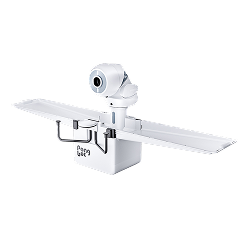
A tennis ball machine can help you repeat a feed and measure target accuracy during solo practice. Pongbot’s Pace S Pro tennis ball machine offers customizable drills for that repetition.
Pair machine sessions with live returns and scored points. Repeatable feeds help you work on execution; an opponent makes you read the ball and decide. No machine setting or drill score awards an official NTRP rating.
Frequently Asked Questions
Is a 3.5 NTRP rating good?
It is a useful level for finding compatible competition, rather than a grade you pass or fail. Judge progress through the points you can now play more reliably and the matches you enjoy.
Can my rating go up after a loss?
Yes. The result is assessed against the expected outcome, so a loss can still improve your rating. A win can also lower it. The USTA ratings FAQ linked above explains why.
Can a coach give me an official NTRP rating?
A coach can help assess your game and identify gaps. For an official self-rating, complete the USTA questionnaire; a coaching opinion alone is not that registration process.
How long does it take to move up half a level?
There is no guaranteed training timetable. Your starting skills, practice quality, match experience, and results all affect progress. Set measurable practice goals instead of treating a fixed number of weeks as a promise.
Is NTRP the same as UTR?
No. They are separate rating systems. Do not use a conversion chart to establish USTA eligibility; check your official NTRP record and the event’s requirements.
Your Next Step
Check your official rating, then review a recent set. Identify one situation that repeatedly costs you points and build your next practice around it. A number is useful when it helps you choose better competition and more purposeful practice.


