
















The topspin forehand is the most important attacking stroke in modern table tennis. Learn the grip, stance, swing path, and drills that generate heavy spin and consistent winners.
The forehand topspin generates heavy forward rotation that pulls the ball down onto your opponent's side, letting you hit hard while keeping the ball on the table. Whether you're attacking a push, countering a chop, or dealing with a long backspin serve, this is the shot that separates consistent attackers from passive defenders.
Steps in the stroke
Power source
Follow-through target
Reps needed to master
The Setup: Grip and Stance

Before you hit a single ball, get your grip and stance right. Everything else in the stroke depends on these two foundations.
The grip: Use a shakehand grip. Hold the racket so your index finger wraps slightly around the backhand edge of the blade, and your thumb rests lightly on the front. Your remaining fingers curl naturally around the handle. The key is keeping your grip firm but relaxed — a death grip kills wrist mobility and reduces spin.
The stance: Stand with your feet slightly wider than shoulder-width, knees bent, and weight on the balls of your feet. Your front foot should point roughly toward the table, your back foot at about 45 degrees. This gives you a stable base to rotate from. Keep your body angled so your front shoulder faces the table — you won't be hitting with your arm alone.
The ready position: Bat starts below waist height, slightly in front of your body. This low starting point is critical — it's what gives you room to swing upward and generate topspin. If your bat begins at table height, you have nowhere to generate the brushing motion that makes the shot work.
Tip: Keep your grip consistent throughout every repetition. Grip changes mid-stroke are one of the most common causes of inconsistency in developing players. Pick your grip once and commit to it.
The Stroke: Step by Step
Once the ball is approaching, this is the full sequence of the forehand topspin stroke:
- Rotate your waist back as the ball comes in — don't pull your arm back separately. The body rotation loads the power. Your knees stay bent throughout.
- Push up with your legs as the ball reaches the right distance. This upward drive from your legs is what separates good topspin hitters from beginners. Arm speed alone won't generate enough spin — you need the whole body working together.
- Rotate your waist forward and extend your arm toward the ball. Your bat should contact the ball just in front of your body, at roughly waist to stomach height.
- Brush the ball upward with a fast, upward acceleration of your bat — the more upward brush, the more spin. The contact point is slightly toward your opponent's side of the ball, brushing the upper half.
- Follow through to head height. Your bat should finish around forehead or temple height, well above where it started. Finishing low is the most common mistake and it kills both spin and consistency.
The entire motion should feel like one fluid sequence — rotate back, drive up, brush through, follow high. Practice it slowly at first to build the pattern, then gradually speed up.
Drill: After each topspin, freeze with your bat above your head and check the angle before swinging again. This builds the body memory for the correct finishing position. According to Table Tennis Coach, this freeze-check method is one of the most effective self-correction tools available to developing players.
Common Mistakes and How to Fix Them
These errors show up in players at every level. Identifying and correcting them early saves months of frustrated practice.
Hitting the ball too late
If you're making contact behind your body or after the ball has already passed your optimum contact point, you lose leverage and can't generate upward spin effectively. Fix this by moving your feet earlier and starting your rotation as the ball is incoming, not when it arrives. A good drill: set up with your bat at waist height and contact the ball at the absolute top of its bounce.
Finishing the stroke too low and forward
Many beginners end the stroke with the bat finishing below and in front of the body, like a tennis forehand. In table tennis, the bat must finish upward. Imagine you're wiping something off the top of your forehead — that gives you the right finishing arc. Practice this drill: after each topspin, freeze with your bat above your head and check the angle before swinging again.
Trying to muscle the ball
Spin comes from racket head speed, and racket head speed comes from a relaxed, fast swing — not from squeezing harder. Players who grip tighter generate less spin and more inconsistency. Keep your grip firm but loose through the forearm, and let the acceleration of the swing do the work.
Grip changes during the stroke
Switching your grip mid-stroke disrupts timing, contact point, and confidence. Pick one grip and commit to it. The exact angle varies slightly between players — what matters is that your grip stays consistent throughout each repetition.
Not using the legs
The legs aren't optional add-ons to the forehand topspin — they're primary power sources. Without the upward push from your knees and the rotation from your waist, the arm alone can't generate enough speed to produce heavy topspin. Practice the stroke with an emphasis on pushing up through your legs first, then add the arm rotation on top.
Fix it fast: Most of these mistakes stem from rushing the stroke. Slow everything down — your preparation, your rotation, your contact — until the pattern is embedded. Speed comes after accuracy, not before. TopspinPro notes that expecting instant results is the single most common mistake beginners make — patience with deliberate practice beats forcing progress every time.
Using a Ball Machine to Build the Stroke

Building a consistent forehand topspin requires hundreds of quality repetitions — and that's where a ball machine becomes a serious advantage. Unlike hitting with a partner, a machine delivers the same ball with identical spin, speed, and placement every time, so you can focus purely on your technique without unpredictability getting in the way.
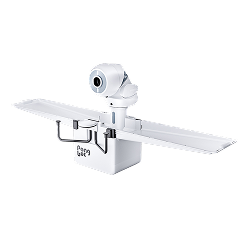
The Pongbot Omni S Pro is purpose-built for this kind of deliberate practice. Its drill memory function lets you program a consistent backspin feed at the exact pace and placement you need to develop the stroke, then progress to faster or more varied feeds as your technique improves. The ability to lock in one feed pattern and build repetitions before moving on is exactly how technique gets internalized.
For players working through the fundamentals, browsin htmlg the full Ping Pong Robot collection shows all available Pongbot table tennis machines — each with different feed speed and spin capabilities suited to different training goals.
Shop the Omni S Pro
Programmable drill memory. Consistent backspin feeds. The machine that grows with your game.
How to Generate More Topspin

Once you have the basic technique down, these adjustments add more spin to your forehand:
Close your bat angle slightly
A more closed angle at contact adds more upward friction on the ball. Experiment in small increments — even 5 to 10 degrees makes a noticeable difference in spin generation.
Brush more, don't hit harder
The spin comes from the friction of the brush, not from raw power. Focus on the upward acceleration of your bat through contact rather than on hitting the ball forward.
Use your wrist for final snap
The wrist adds a final burst of acceleration at the end of the swing path. It should be relaxed and slightly extended through contact, not locked. Think of it like cracking a whip.
Increase follow-through height
The ball gets more topspin the longer your bat stays in contact while brushing upward. If your finish is around chest height, push it to forehead height and notice the difference immediately.
Conclusion: How to Hit a Topspin Forehand
The forehand topspin is the foundation of modern attacking table tennis. The stroke comes down to one key principle: brush the ball upward rather than hitting it flat. Start with your grip firm but relaxed, your stance stable with knees bent, and your bat below waist height. From there, rotate your body back, drive up with your legs, rotate forward, and brush the ball upward through contact — finishing with your bat above your head.
Practice this sequence slowly until it feels like one motion, then gradually add speed. Use an AI ping pong machine like the Pongbot Nova S Pro to lock in consistent repetitions without depending on a training partner. The stroke takes time to master, but every session you put in builds real, transferable skill that shows up in every match you play.
For a deeper look at how AI-powered training machines compare to traditional models, see AI Ping Pong Machine vs. Traditional Robot — What's the Difference?
FAQ: How to Hit a Topspin Forehand
What is the correct grip for a forehand topspin in table tennis?
Use a shakehand grip with your index finger resting lightly on the backhand edge of the blade and your thumb on the front. Keep the grip firm but relaxed — tension in the forearm kills wrist snap and reduces spin. The exact grip style varies slightly between players, but consistency matters more than finding the "perfect" angle.
What is the correct bat angle for a forehand topspin?
A slightly closed bat angle — meaning the face tilts slightly toward your body — generates the best upward friction on the ball. Start with a moderately closed angle and adjust in small increments as you practice. Too open and the ball goes long; too closed and you scoop under instead of brushing through.
How do I generate more topspin on my forehand?
Focus on three things: close your bat angle slightly, brush upward through the back half of the ball, and finish your follow-through high. Spin comes from the friction and upward acceleration of the brush, not from hitting harder. A relaxed grip, fast upward swing, and high finish are the three biggest levers for adding spin.
Why does my forehand topspin go into the net?
The most common cause is an open bat angle at contact — you're hitting slightly under the ball instead of brushing through it. Check that your bat angle is slightly closed and that you're swinging upward, not forward. Also make sure you're making contact in front of your body, not behind it.
How long does it take to learn the forehand topspin?
Most players see noticeable improvement within a few weeks of deliberate practice. However, true mastery — where the stroke becomes automatic under match pressure — typically takes several months of consistent repetition. Using a ball machine to automate the feed timing removes one variable and lets you focus purely on technique.


