


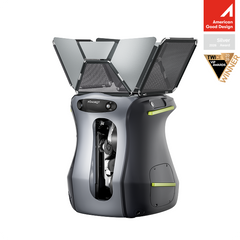
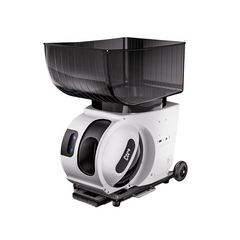
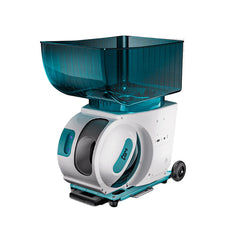



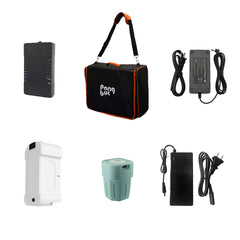
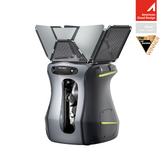
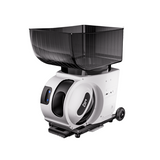
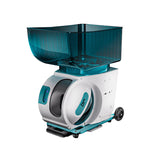

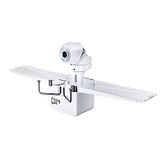


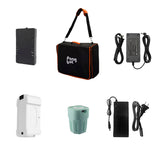


What if one training machine could follow you across three different racket sports? That's the idea behind Pongbot Aura, a new AI-powered training robot designed for tennis, pickleball, and padel.
In a May 2026 feature, The Gadgeteer took a closer look at Aura's multi-sport design, adaptive ball-feeding system, AI-powered Spotter camera, and the technology behind Pongbot's latest training platform.
One Machine. Three Sports.
Aura is built around a simple but ambitious concept: instead of creating separate machines for tennis, pickleball, and padel, Pongbot designed one platform that can adapt to different ball sizes and training requirements.
That makes Aura more than a traditional ball machine. It is designed as a multi-sport training system that combines automated feeding, customizable drills, AI-assisted analysis, and connected training features.
Built for Tennis, Pickleball, and Padel
The biggest difference between Aura and conventional single-sport ball machines is its ability to support three sports from the same chassis.
Tennis
Train with high-speed feeds, spin variations, lobs, directional shots, and match-style drills.
Pickleball
Practice dinks, third-shot drops, kitchen placement, and other pickleball-specific situations.
Padel
Work on feeds and trajectories designed around the unique wall-based movement of padel.

The Technology Behind Aura's Multi-Sport Design
Supporting different sports requires more than changing software settings. Tennis, pickleball, and padel use balls with different sizes, materials, and playing characteristics.
Aura addresses this with an adaptive wheel-track system designed to accommodate ball diameters ranging from approximately 40 mm to 80 mm. The mechanism allows the same feeding system to work across the three sports.
An Adaptive Ball-Feeding System
Instead of relying on a fixed configuration designed around one type of ball, Aura's adaptive mechanism adjusts to different ball diameters.
This is one of the key pieces of hardware that allows Pongbot to turn a traditional ball machine into a genuinely multi-sport platform.
Portable by Design
Aura is also designed to be significantly easier to transport than many traditional full-size ball machines. At around 7 kg (15 lb), its relatively lightweight chassis makes it practical for players who need to move their equipment between home, car, and court.
The compact design is particularly important for a machine intended to support multiple sports. Instead of storing three separate training machines, players can use one portable platform and configure it for the sport they want to practice.
From a Ball Machine to an AI Training System
The physical machine is only one part of Aura's design. Pongbot is also building an AI-powered software layer around the robot to make training more interactive and personalized.
Players can customize training sessions by adjusting factors such as ball placement, launch speed, spin, and frequency. The system also supports a large library of built-in drills and a visual interface for creating custom training sequences.
Custom Drills
Build training sessions around specific ball placements, speeds, spins, and frequencies rather than relying only on preset programs.
Recovery Trigger
Aura can adjust the timing of feeds based on player positioning, helping create more responsive and realistic practice situations.
Match Challenge
Randomized feeds can create more unpredictable training scenarios designed to feel closer to the demands of live play.

Meet Spotter: The AI Vision System
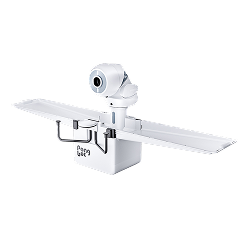
Aura's AI capabilities become even more advanced with Spotter, a detachable dual-camera module designed to observe what happens on the court.
According to Pongbot, Spotter uses high-frame-rate cameras and a wide field of view to track elements such as ball movement and player positioning. The system is designed to turn those observations into useful training information and feedback.
Shot Analysis
Spotter is designed to track shots and analyze elements of player movement and swing mechanics.
Movement Tracking
Player positioning and movement can be analyzed to help make training feedback more relevant to what actually happens on court.
Real-Time Feedback
The AI vision system is designed to provide feedback during training rather than simply recording footage for later review.
More Than a Training Camera
Spotter is designed to support more than player analysis. Pongbot also positions the module as a potential AI referee, scoring assistant, live-streaming tool, and automatic highlight generator.
That makes the module an important part of Aura's broader vision: connecting training, match analysis, and content creation through one AI-powered system.
Voice Control for More Natural Training
Another part of Aura's connected training experience is voice control. Instead of stopping a session to adjust settings manually, players can use natural-language commands to change aspects of their training.
Pongbot describes this as an LLM-powered interaction layer. Example commands can include requests for more topspin, wider angles, or faster cross-court feeds.
The idea is straightforward: the more naturally a player can communicate with the training system, the less attention needs to be taken away from the actual practice session.
Training That Can Become More Match-Like
One of the limitations of traditional ball machines is predictability. Repetition is useful, but repeating exactly the same feed does not always prepare players for the uncertainty of a real opponent.
Aura's Recovery Trigger and Match Challenge features are designed to address that gap. Instead of simply firing balls according to a fixed sequence, the system can react to player position and introduce more varied situations.
The bigger idea behind Aura is not simply to automate ball feeding, but to make solo practice more responsive, varied, and connected.
Pro-Match Replication: Turning Match Footage into Practice
Another interesting concept highlighted by The Gadgeteer is Pro-Match Replication. The feature is designed to allow players to use match footage as the foundation for customized training.
Rather than creating every training sequence manually, the system is intended to recreate shot patterns from actual play, including elements such as zones, speed, and spin.
For players who want to turn weaknesses identified during a match into the focus of their next training session, this approach could make practice much more targeted.
Spotter Can Also Work Beyond Training
Spotter's capabilities extend beyond traditional training analysis. Pongbot also designed it to support match-related functions such as automated scoring, line-call assistance, live streaming, and highlight creation.
This gives Aura S a broader role within a player's training environment. The same hardware can potentially help analyze practice sessions, record matches, and create useful content afterward.

A More Flexible Alternative to Single-Sport Machines
The multi-sport concept is particularly interesting for players who participate in more than one racket sport.
A tennis-only machine makes sense for a dedicated tennis player. A pickleball-only machine may be the better fit for someone who only plays pickleball. But for players who regularly switch between tennis, pickleball, and padel, buying separate machines can quickly become expensive and inconvenient.
Aura's approach is to consolidate those training needs into one system.
One Platform, Multiple Training Goals
Aura's value proposition isn't only about replacing multiple ball machines. It's about creating a single training ecosystem that can grow with the player across different sports.
The same platform can be used for basic repetition, structured drills, movement training, match-style practice, and AI-assisted analysis.
What Makes Aura Different?
Multi-Sport Hardware
One machine is designed to support tennis, pickleball, and padel rather than being limited to a single sport.
AI Training Layer
AI-assisted features are integrated into both the training robot and the optional Spotter vision system.
Portable Form Factor
A lightweight design makes it easier to transport the robot to different courts and training environments.
Designed for the Way Players Train Today
Modern sports training is increasingly connected. Players use apps to track performance, video to analyze technique, and wearable devices to understand movement. Aura takes a similar approach and brings those ideas directly into the ball-machine category.
Instead of treating the robot as a standalone piece of equipment, Pongbot is building an ecosystem around it: automated feeding, customizable drills, AI vision, voice control, performance analysis, match simulation, and a connected training community.
That broader approach is what makes Aura particularly interesting. The robot is not simply trying to throw more balls. It is designed to help players make better use of the time they already spend on court.
Final Thoughts
The Gadgeteer's coverage highlights why Aura stands out in an increasingly crowded sports-training market. Its most distinctive feature isn't any single specification, but the way multiple technologies are combined into one portable system.
Supporting three racket sports from one chassis, adding adaptive ball feeding, and combining those capabilities with AI vision and personalized training gives Aura a very different proposition from conventional single-sport ball machines.
For players who enjoy multiple racket sports—or simply want a more intelligent approach to solo training—Aura represents an interesting step toward the next generation of connected sports equipment.
Meet the Pongbot Aura
Train across tennis, pickleball, and padel with one portable AI-powered training system.
Explore Pongbot AuraArticle from The Gadgeteer: Pongbot Aura is a $499 AI ball machine for tennis, pickleball, and padel


