










Linda was a keen tennis player when she was younger, playing at a high level within her local club. Before turning 20, she was among the stronger players at the club. But as family responsibilities grew and her career moved forward, she gradually stepped away from the tennis court. What was meant to be a pause ended up lasting around twenty years.
When she finally picked up a racket again, she was older, but her love for racket sports had never really left her. Then, around six years ago, someone introduced her to padel—and it didn’t take long for her to fall in love with it.
“I was hooked from the very first time I played,” Linda recalls. “There’s so much strategy in the sport. It’s almost like mathematics—precise and logical, but full of possibilities. You can feel the way the ball bounces, use the glass walls, and play with angles and timing. It’s fascinating.”
Before long, Linda went from rediscovering racket sports herself to helping others discover padel too. She became a certified padel coach and, together with Martijn Haan, developed Padel Party(www.padelparty.nl): a coaching organization built around flexible lessons, personal attention, fun, and bringing players together.

Padel Party provides coaching at several locations in the Alkmaar and Egmond area, including TC Hogedijk in Egmond. TC Hogedijk itself has grown significantly since introducing padel and now has four panoramic padel courts alongside its tennis facilities.

The name Padel Party says a lot about Linda’s philosophy. “For me, having fun is one of the most important parts of the sport. Of course you want to improve, but enjoying the game and the people you play it with should always be at the heart of it.”

01 — Linda Meets Pongbot: When Technology Enters the Court
What makes Linda’s approach different isn’t simply what happens during a lesson. She puts considerable thought into the entire experience around it.
Linda studied computer science at the University of Amsterdam, including AI and robotics, and later worked in IT consulting, innovation and strategy before building her own businesses. Her background has made her interested in how technology and systems can make things work more efficiently. Today, she uses that experience to develop smart solutions for scheduling, communication, and organizing players.
At the heart of Linda’s approach is a simple belief: technology is most valuable when it strengthens human connection and gives the coach more time and attention for what truly matters. That is how she sees ball machines. It could take over one specific part of the job—delivering repeatable, precisely programmed balls—so the coach can concentrate on observing, guiding, questioning, encouraging and adapting.
She had been paying attention to ball machines for some time and was interested in how they could become part of coaching. But before bringing one into her lessons, there was one thing that mattered above everything else: reliability.
A reliable ball machine had to be something she could trust. If she programs a machine to deliver a certain speed, spin and placement, she expects it to reproduce that ball consistently. That became the starting point for her decision to consider Pongbot.


02 — Pongbot Pace S Pro: Performance That Earned Linda’s Trust
“I liked how easy it was to program training routines, and I really appreciated the consistency. It hardly ever jams, and the settings are very accurate.”
Once Linda knew she could rely on the machine to deliver the ball she had programmed, she began to see it not simply as a piece of equipment, but as an assistant coach on the court.
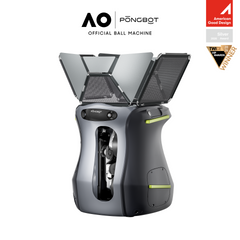
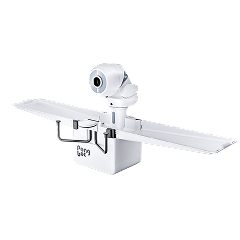
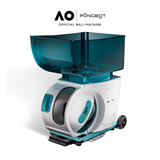
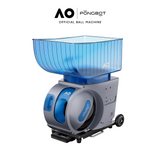
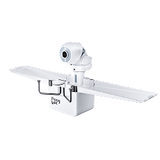
The Pace S Pro helps meet these needs by making training more responsive and flexible. Combined with the Recovery Trigger function, its UWB tracking technology allows drills to respond to the player’s movement rather than simply sending balls at fixed intervals.
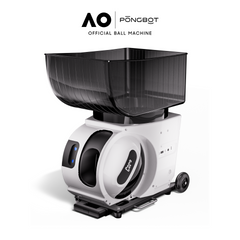
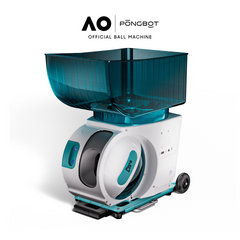
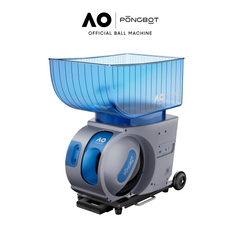
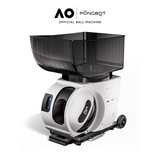
Linda can also build training sessions around different players and shot patterns. Pongbot allows her to customize key ball parameters—including speed, spin, height, location, and depth —giving her more flexibility to adapt each session to different training needs.
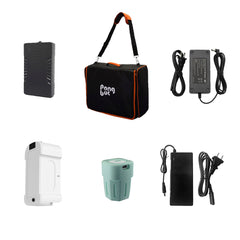
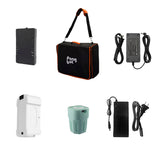
Its large ball capacity and long battery life also mean fewer interruptions for collecting, reloading, or recharging, allowing Linda to focus on coaching across multiple lessons.
Pace S Pro Highlights


03 — With Pongbot, Linda Can Stand Beside Her Students
Traditionally, when a coach feeds balls by hand, much of their attention is divided between delivering the next ball and observing what the player is actually doing. With Pongbot taking over repetitive and precise ball feeding, Linda no longer has to remain on the other side of the court. The machine can provide the repetition while she moves around the court and positions herself where she can best observe and coach the player.
“This machine is more precise at feeding balls than any coach, and I can stand next to my students and maximize the coaching.” Now she can watch a player’s swing path, preparation, footwork, positioning and timing from close by. She can correct a movement at the moment it happens, ask questions, give feedback, or encourage a player when something starts to click.
She can also record a player on her phone and review the movement together.
Linda actually hesitated before deciding to promote the machine. “I was worried that if students used it, maybe they wouldn’t need a coach anymore.” But eventually, she came to see things differently.
A good ball machine can repeat a ball more consistently than a human coach. But it cannot truly see the player standing in front of it. It cannot understand why someone is struggling, recognize the right moment to change an exercise, explain a tactical choice in a different way, or share the excitement when something suddenly works.
A truly good tool doesn’t make the coach less important. It gives the coach more opportunity to coach.


04 — Pongbot Meets Players Where They Are
The moments Linda values most aren’t necessarily the ones where a student hits the technically perfect shot.
Often, they are the moments when the court suddenly fills with laughter.
“Padel has a relatively low barrier to entry,” Linda says. People from all kinds of backgrounds — experienced tennis players discovering a new racket sport, complete beginners, older adults who want to stay active, children, competitive players who want to improve, and people who simply came along because a friend said, “Come and give it a try—can find their own way to enjoy it.
With older beginners, for example, there is no reason to immediately reproduce the speed or difficulty of a standard training session. The Pongbot can be slowed down and programmed to deliver high, comfortable balls that give players enough time to prepare and make contact.
One ball goes over the net. Then another. And suddenly people who may have thought padel would be too difficult for them are rallying and laughing.
“Linda, this is so much fun!” It is exactly the reaction she wants.


Linda has also used the machine while coaching players with different physical capabilities, including a student living with Parkinson’s disease. The ability to precisely control the pace, repetition and difficulty of an exercise can be particularly useful in situations like these. Because the goal isn’t to make every player train the same way. It’s to find the right challenge for the person standing in front of you.
Today, Linda is a Pongbot brand ambassador. For her, the value of the machine goes beyond training alone. It gives coaches more flexibility to adapt exercises to the person in front of them.
Back on the courts in Egmond, Linda stands beside her students as Pongbot sends one programmed ball after another. And if the result is more people laughing on the court? For Linda, that may be the best measure of success.


