














This guide covers official tennis court dimensions in feet and meters, based on the ITF Rules of Tennis. You'll find every line, the net height, how much space a full court needs, kids' court sizes, and how a tennis court compares to a pickleball court.
- Every tennis court is 78 feet long, for both singles and doubles.
- Doubles courts are 36 feet wide. Singles courts are 27 feet wide.
- The net is 3.5 feet high at the posts and 3 feet high at the center.
- All measurements are taken to the outside of the lines.
- For club play, the ITF recommends at least 18 feet behind each baseline and 10 feet beside each sideline.
Standard Tennis Court Dimensions
Rule 1 of the ITF Rules of Tennis sets the size of every regulation court. The table below lists the main measurements.
| Measurement | Feet | Meters |
|---|---|---|
| Court length (baseline to baseline) | 78 ft | 23.77 m |
| Doubles court width | 36 ft | 10.97 m |
| Singles court width | 27 ft | 8.23 m |
| Net to service line | 21 ft | 6.40 m |
| Service line to baseline | 18 ft | 5.48 m |
| Service box width | 13.5 ft | 4.11 m |
| Doubles alley width (each side) | 4.5 ft | 1.37 m |
| Net height at center | 3 ft | 0.914 m |
| Net height at posts | 3.5 ft | 1.07 m |
Source: ITF Rules of Tennis 2026, Rule 1 and Appendix X. Service line to baseline, service box width, and alley width are calculated from those figures.
Diagram drawn to scale from ITF Rule 1. Measurements run to the outside of the lines.
Singles vs Doubles Court Size
Singles and doubles courts are the same length. The only difference is width, since doubles adds a 4.5-foot alley on each side.
- Singles court: 78 × 27 ft, or 2,106 square feet of playing area.
- Doubles court: 78 × 36 ft, or 2,808 square feet of playing area.
- Service boxes: The same for both. Doubles alleys aren't part of the service box.
Most courts are marked for both. When singles is played on a doubles court, two singles sticks hold the net up at 3.5 feet. The ITF says their centers sit 3 feet outside the singles sidelines.
Tennis Court Line Names and Measurements
Each line on a tennis court has a name and a set width. All court measurements are taken to the outside of the lines, and every line must be one color that contrasts clearly with the surface.
- Baselines. The lines at each end of the court.
- Sidelines. The lines along each side. Inner lines are for singles, outer lines are for doubles.
- Service lines. Run parallel to the net, 21 feet from it, between the singles sidelines.
- Center service line. Splits the area between the net and service line into two service boxes.
- Center mark. A short mark in the middle of each baseline that shows where to stand to serve.
| Line | Required width |
|---|---|
| Center service line | 2 in (5 cm) |
| Center mark | 2 in (5 cm) wide, 4 in (10 cm) long |
| Baselines | 1 to 4 in (2.5 to 10 cm) |
| All other lines | 1 to 2 in (2.5 to 5 cm) |
Source: ITF Rules of Tennis 2026, Rule 1.
New to the game? Our guide to tennis rules for beginners explains how these lines decide whether a ball is in or out.
Tennis Net Height and Size

A regulation tennis net is 3.5 feet (1.07 m) high at the posts and 3 feet (0.914 m) high at the center. A white strap holds the middle down to the correct height.
- Net post position (doubles): 3 ft (0.914 m) outside each doubles sideline.
- Doubles net span: 42 ft (12.80 m) between post centers.
- Singles net: 33 ft (10 m), used when a court is marked for singles only.
- Center strap: No more than 2 in (5 cm) wide.
- Net band: 2 to 2.5 in (5 to 6.35 cm) deep on each side.
- Net posts: No more than 6 in (15 cm) square or in diameter.
How Much Space You Need for a Tennis Court

A full court needs space behind and beside the lines so players can chase balls safely. The ITF gives two sets of recommended minimums.
| Level of play | Behind each baseline | Beside each sideline | Total area needed |
|---|---|---|---|
| Recreational and club | 18 ft (5.48 m) | 10 ft (3.05 m) | 114 × 56 ft (6,384 sq ft) |
| International competition | 21 ft (6.40 m) | 12 ft (3.66 m) | 120 × 60 ft (7,200 sq ft) |
Source: ITF Rules of Tennis 2026, Appendix X. Total area is calculated from a 78 × 36 ft doubles court.
- Indoor courts: The ITF recommends at least 29.6 ft (9.0 m) from the surface to the ceiling, measured at the net.
- Covered show courts: The ITF calls for a minimum height of 10 m unless it approves otherwise.
Red and Orange Court Sizes for Kids

Players aged 10 and under can compete on smaller courts with slower balls. Appendix VIII of the ITF rules sets these sizes.
| Court | Length | Width | Net height at center | Recommended ball |
|---|---|---|---|---|
| Red | 36 to 42 ft (10.97 to 12.80 m) | 14 to 20 ft (4.27 to 6.10 m) | 31.5 to 33 in (0.800 to 0.838 m) | Stage 3 (Red), up to age 8 |
| Orange | 58 to 60 ft (17.68 to 18.29 m) | 20 to 27 ft (6.10 to 8.23 m) | 31.5 to 36 in (0.800 to 0.914 m) | Stage 2 (Orange), ages 8 to 10 |
| Full size | 78 ft (23.77 m) | 27 or 36 ft | 36 in (0.914 m) | Stage 1 (Green) for advanced 9 to 10 year olds |
Source: ITF Rules of Tennis 2026, Appendix VIII.
Tennis Court vs Pickleball Court
A pickleball court is much smaller than a tennis court. USA Pickleball sets a regulation court at 20 by 44 feet, with a non-volley zone 7 feet from the net on each side.
| Measurement | Tennis (doubles) | Pickleball |
|---|---|---|
| Length | 78 ft | 44 ft |
| Width | 36 ft | 20 ft |
| Playing area | 2,808 sq ft | 880 sq ft |
| Same court for singles and doubles | No | Yes |
Because it's so much smaller, a pickleball court fits inside a tennis court footprint. You'll need pickleball lines and a pickleball net set to that sport's height.
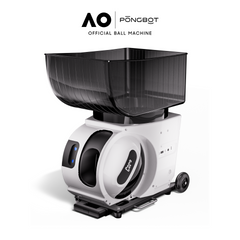
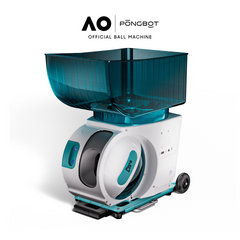
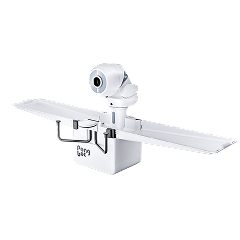
If you play both, a multi-sport machine like the PONGBOT Aura trains tennis, pickleball, and padel from one unit.
How to Measure and Mark a Tennis Court
Appendix X of the ITF rules lays out a simple method using two tape measures. Here's a short version for a combined singles and doubles court.
- Mark the net line. Lay a straight line 42 ft (12.80 m) long and mark its center.
- Mark points along the net line. From the center, mark 13 ft 6 in (singles sidelines), 16 ft 6 in (singles sticks), 18 ft (doubles sidelines), and 21 ft (net posts) each way.
- Find the corners. From each doubles sideline point, run one tape 53 ft 1 in (16.18 m) on the diagonal and another 39 ft (11.89 m) along the sideline. Where they meet is a baseline corner.
- Check the baseline. The distance between the two corners should be exactly 36 ft (10.97 m).
- Mark singles sidelines. Measure 4 ft 6 in (1.37 m) in from each corner along the baseline.
- Mark service lines. Measure 21 ft (6.40 m) from the net along each singles sideline and the center line.
- Repeat on the other side. Use the same steps to finish the second half of the court.
Using Court Dimensions in Your Practice
Knowing the court's layout helps you set clear targets. The 18-foot backcourt between the service line and baseline is the classic zone for deep groundstrokes.
- Depth drills. Aim past the service line and count how many balls land in the backcourt.
- Serve targets. Each service box is 13.5 by 21 feet. Split it into wide, body, and T zones.
- Alley work. In doubles, practice down-the-line shots into the 4.5-foot alley.
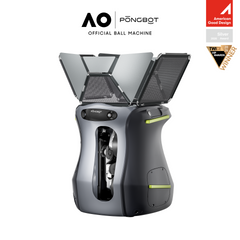
- Machine setup. A tennis ball machine placed behind the far baseline can feed deep balls, short balls, and lobs across the full court.
For drill ideas you can run in a smaller space, see our tennis drills at home.
Practical Tips for Using Tennis Court Measurements
- Measure to the outside of the lines. That's how the rules define every dimension.
- Plan for runoff, not just the lines. A 78 × 36 ft court needs far more space to play safely.
- Use metric for official specs. ITF documents list both, and meters avoid rounding errors.
- Mark kids' courts with tape or throw-down lines. Red and orange courts fit inside a full court.
- Check the net strap. A loose strap is the most common reason a net sits too high at the center.
Common Mistakes With Tennis Court Dimensions
- Measuring to the middle of the lines. The rules measure to the outside edge.
- Thinking singles courts are shorter. Both are 78 feet long. Only the width changes.
- Forgetting the net posts. Posts sit 3 feet outside the doubles sidelines, so the net spans 42 feet.
- Ignoring space behind the baseline. Too little runoff limits play and raises the risk of injury.
- Mixing up the service line and baseline distances. It's 21 feet from net to service line and 18 feet from service line to baseline.
Frequently Asked Questions
What is the size of a standard tennis court?
A standard tennis court is 78 feet (23.77 m) long. It's 36 feet (10.97 m) wide for doubles and 27 feet (8.23 m) wide for singles. These sizes come from Rule 1 of the ITF Rules of Tennis. All measurements are taken to the outside of the lines.
How much space do you need to build a tennis court?
For club and recreational play, the ITF recommends at least 18 feet behind each baseline and 10 feet beside each sideline. That gives a total area of about 114 by 56 feet. For international competition, the ITF recommends 21 feet behind and 12 feet beside, for a total of 120 by 60 feet. Check local building rules before you plan a court.
How high is a tennis net?
A tennis net is 3 feet (0.914 m) high at the center and 3.5 feet (1.07 m) high at the posts. A white center strap holds the middle down to the correct height. For doubles, the posts sit 3 feet outside each doubles sideline.
Is a singles tennis court smaller than a doubles court?
A singles court is narrower but not shorter. Both are 78 feet long. A singles court is 27 feet wide, while a doubles court adds a 4.5-foot alley on each side for a total of 36 feet. Most courts are marked for both, so the same surface works for either game.
Can I play pickleball on a tennis court?
Yes, a pickleball court fits inside a tennis court because it's much smaller. A regulation pickleball court is 20 by 44 feet, compared with 36 by 78 feet for doubles tennis. You'll need pickleball lines, such as tape or painted lines, and a net set to pickleball height. Check with the court owner before adding any markings.
Know the Court, Train With Purpose
Tennis court dimensions are simple once you know the key numbers. The court is 78 feet long, 36 feet wide for doubles, and 27 feet wide for singles, with a 3-foot net at the center. Use these lines as practice targets and every session gets more focused.

Full court coverage with 6 placement positions, 80 mph speed, and 396+ preset drills.
$999.99 $1,699.99

Trains tennis, pickleball, or padel. Weighs only 7 kg.
$599.99 $1,199.99

Pressureless core for consistent bounce. Works with Pace and Aura series machines.
$63.99 $99.99
Keep Reading


