










You do not need a tennis court or a training partner to sharpen your game.
With a racket, a few tennis balls, and a safe practice area, you can work on footwork, racket control, groundstrokes, and parts of your serve at home. These drills can also help pickleball players develop general hand-eye coordination, balance, and movement, although pickleball-specific practice is still important. Keep reading to find simple tennis drills at home for beginners, solo players, small spaces, and more advanced practice.
- Wall rallies can improve basic timing, racket control, and consistency, but they do not fully simulate live rally conditions
- Shadow swings help rehearse forehand, backhand, and serve movement patterns, but controlled ball contact is also useful
- Footwork drills can improve movement efficiency, balance, agility, and recovery habits
- Beginners should focus on balance and accuracy before hitting harder
- Using balls suited to your space, along with simple markers, can make practice more organized and safer
- PongBot offers tennis balls, sports accessories, and training products for tennis and other racket sports
What You Need for Tennis Drills at Home
A small amount of equipment can make home tennis practice more effective. Start with the basics, then add training tools as your skills and space allow.
Basic Tennis Equipment
| Equipment | How it helps |
|---|---|
| Tennis racket | Lets you practice strokes and racket control |
| Tennis balls | Useful for self-feeds, wall rallies, and coordination drills |
| Foam or low-compression balls | Often more suitable for indoor practice |
| Tape, cones, or shoes | Mark movement areas and targets |
| Safe wall or rebound net | Provides feedback during solo rallies |
| Phone camera | Helps you review basic movement patterns |
| Resistance band or jump rope | Adds strength and fitness work |
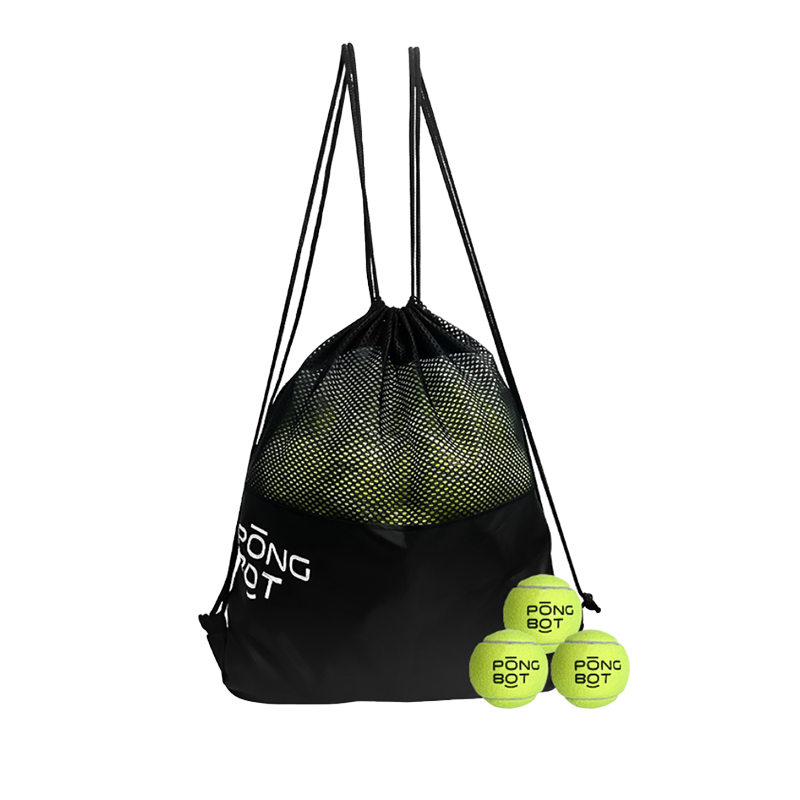
A durable tennis ball is useful for outdoor drills, wall practice, and self-feeds. PongBot tennis balls and sports accessories can be worth considering when you want reliable equipment for regular practice.
Choosing a Safe Practice Area
You can practice in a backyard, driveway, garage, basement, hallway, or large room. These spaces may work for selected drills, depending on their size, surface, ceiling height, and surrounding hazards. Check the area before you begin. Move away from windows, cars, pets, sharp objects, and other people. Use foam or low-compression balls indoors to reduce the chance of damage.
Use a wall only with permission and when it is strong enough for repeated ball impact. Rebound nets should be used according to the manufacturer's instructions.
For general at-home tennis guidance, see the USTA Tennis at Home resources.
Tennis Drills at Home for Beginners

Beginner tennis drills should teach control, balance, and basic movement. Keep each exercise slow at first, then add speed when your technique feels comfortable.
Racket and Ball Control Drill
Hold your racket in front of your body and balance a tennis ball on the strings. Next, tap the ball gently upward and try to keep it in the same area of the racket.
- Tap the ball with the forehand side
- Turn the racket and use the backhand side
- Alternate between both sides
- Walk slowly while keeping the ball under control
This drill can improve basic racket awareness, ball tracking, and hand-eye coordination.
Forehand Shadow Swing
A shadow swing means practicing your stroke without hitting a ball. Start in the ready position, turn your shoulders, take the racket back, swing forward, and finish in a balanced position appropriate for your stroke and intended shot.
- Turning your shoulders early
- Keeping your eyes forward
- Bending your knees
- Finishing in balance
- Using a smooth motion instead of swinging hard
Record yourself from the side to check your form. A phone camera can help you notice basic movement patterns, although a qualified coach is better for detailed technique feedback.
Backhand Shadow Swing
For a two-handed backhand, place both hands on the racket and turn your shoulders before the swing. Move the racket forward with control and finish with your chest facing the target. If you use a one-handed backhand, practice the same ideas of early preparation, shoulder turn, balance, and controlled follow-through with your normal technique.
Practice ten slow swings, then ten normal-speed swings. Keep your head still and return to the ready position after each finish.
Self-Drop Groundstroke Drill
Stand in a safe open space and drop the ball in front of your body. Let it bounce once, then hit a controlled forehand or backhand toward a target. Start with a short swing and soft contact. As your accuracy improves, move farther from the target and use a fuller swing. Keep people, pets, windows, and vehicles away from the direction of the ball.
Solo Tennis Drills at Home Without a Partner

Solo drills are a great way to work on tennis skills when no one else is available. A wall, rebound net, or training target can give you useful feedback after every shot.
Wall Rally Drill
Stand a few feet from a safe wall and hit a gentle forehand. Let the ball bounce back, prepare early, and hit it again. Once you can control your forehand, add backhands. Move farther from the wall or use a lower-compression ball if the rebound is too fast. Count your longest rally and try to beat that number without hitting harder.
Wall rallies can improve basic timing, racket control, and consistency, but they do not fully simulate live-ball conditions with an opponent or partner.
Alternating Forehand and Backhand Wall Rally
Hit one forehand, then one backhand against the wall. Move your feet so your body stays in position instead of reaching with your arms.
- Early racket preparation
- Grip preparation and racket positioning
- Recovery movement
- Ball tracking
- Consistent contact
A rebound net can be useful when you do not have a suitable wall. Pickleball players can use a pickleball-specific training device when the manufacturer confirms that it is designed for pickleball practice.
Wall Target Drill
Place removable tape on a wall to create several targets. Aim at a different target with each shot while keeping your swing controlled. You can practice higher shots, lower shots, forehand targets, backhand targets, crosscourt-style angles, and down-the-line targets.
Record how many shots reach your target out of 20 attempts. Use removable tape and confirm that the wall is suitable for repeated impact.
Ball Toss and Catch Drill
Toss a tennis ball with your non-dominant hand and catch it with the same hand. Change the height and direction of each toss. To make it harder, add a split step, turn around once, or clap before catching. This exercise can help you practice visual tracking and hand-eye coordination, the same kind of coordination that carries over to table tennis and other racket sports.
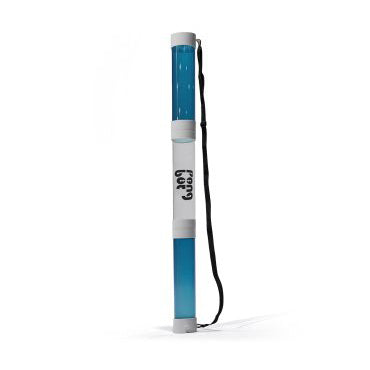
Holds up to 18 balls and works for tennis, pickleball, and padel, so a wall-target session doesn't turn into constant bending down.
$47.99 $69.99
Shop Now In Stock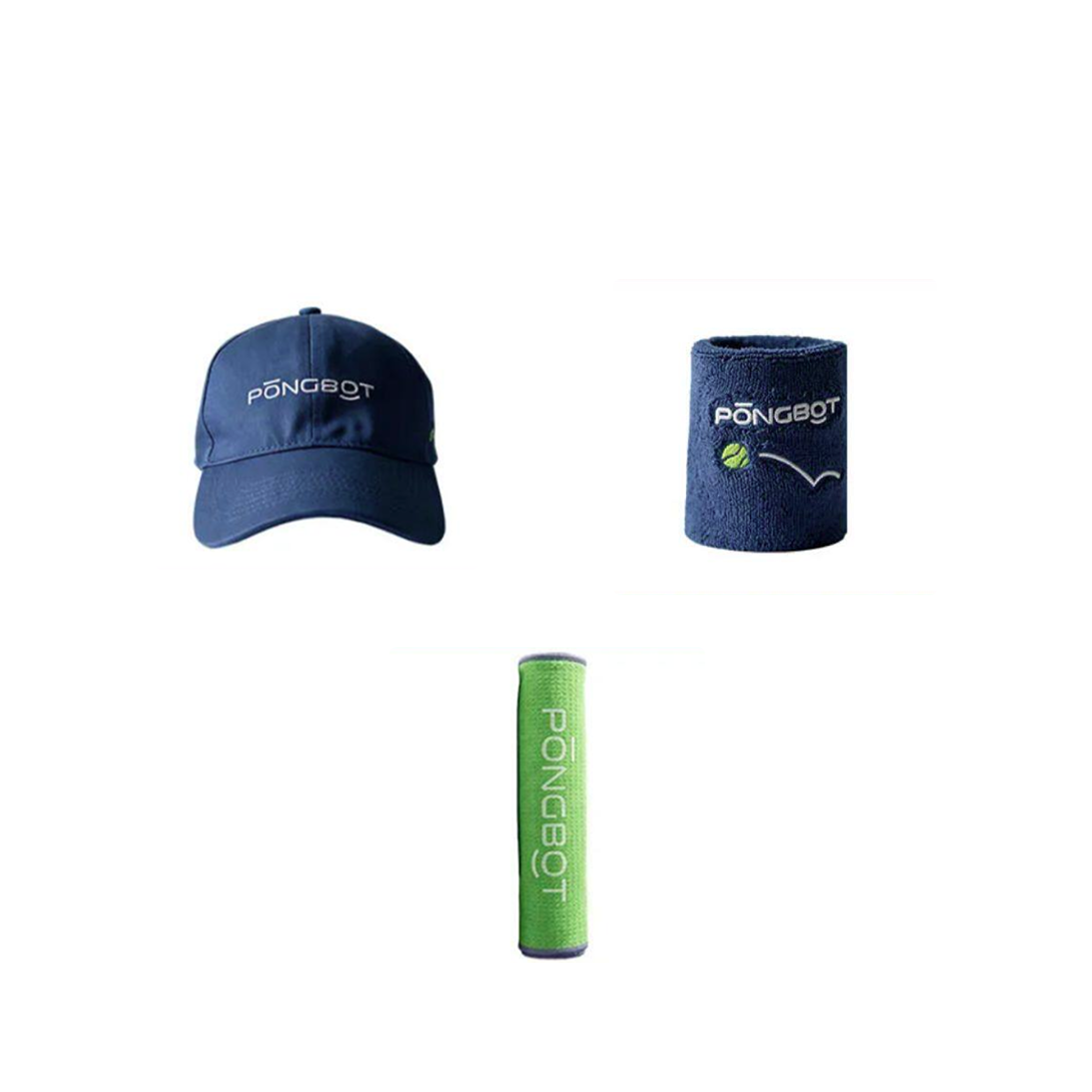
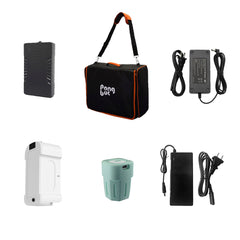
A grab-and-go bundle of on-court basics, useful for keeping a driveway or garage practice session comfortable.
$39.99 $49.99
Shop NowTennis Footwork Drills at Home

Good footwork helps you reach more balls and recover faster after each shot. These tennis footwork drills work in a small space and require very little equipment.
Side-to-Side Shuffle
Place two markers several feet apart. Shuffle from one marker to the other while keeping your knees bent and your chest facing forward. Avoid crossing your feet during this basic shuffle. In actual tennis, crossover steps are also used for covering more distance. Touch or pass each marker, then return to the starting position.
Split-Step Drill
Start in the ready position and perform a small hop. Land in a balanced athletic stance with your feet comfortably apart, then move quickly to the left or right. In live play, the split step is usually timed as your opponent makes contact with the ball. Repeat for 20 to 30 seconds. The split step teaches your body to stay ready for the next shot.
Four-Corner Movement Drill
Place four markers in a square. Move around the square using side steps, forward steps, and backward steps. Add a split step at each corner. Stay balanced when changing direction and return to the center after completing the pattern. This is a general movement drill that can help you practice directional changes and recovery.
Shadow Point Drill
Imagine an opponent hitting the ball to different areas. Split step, move toward the imaginary ball, perform a forehand or backhand shadow swing, and recover toward a balanced position that gives you a good chance of reaching the next ball. Practice wide balls, short balls, deep balls, and backhand corners. This drill connects footwork with real tennis movement.
For additional tennis improvement resources, see the USTA improvement resources.
At-Home Groundstroke and Serve Drills

Groundstrokes and serves need regular repetition. These drills help you improve the main strokes you use during a tennis match.
Forehand Technique Drill
Practice the forehand in slow motion. Begin with the unit turn, let the racket move into a comfortable position below or near the contact level, swing forward, and finish over your opposite shoulder. Do not worry about hitting hard. Clean contact, balance, and a consistent finish matter more during home practice.
Backhand Technique Drill
For the backhand, turn your shoulders as soon as you imagine the ball coming toward you. Keep the racket prepared, bend your knees, and swing through the target. Practice ten shadow swings, then ten self-drop shots. Use a phone recording to check whether you are staying balanced.
Serve Toss Drill
Stand sideways and toss the ball to a repeatable location that allows you to reach it comfortably at full extension. For a toss drill, reach up and catch the ball near its highest point. During a serve, the contact point depends on the player's technique. Repeat the toss without serving. A consistent toss makes the rest of the serve much easier to control.
Trophy Position Drill
Pause briefly in a comfortable trophy-like position to practice balance, shoulder turn, knee bend, and racket preparation. Check that your tossing arm is raised, your knees are slightly bent, and your racket arm is relaxed. Hold the position for two seconds, then lower the racket. Practice this slowly before adding a full serve motion.
Shadow Serve Drill
Perform the complete serve motion without hitting a ball. Work on the leg bend, upward reach, racket movement, and balanced landing. Only practice full serves at home when you have enough safe space. Beginners should first practice the toss and shadow motion before attempting repeated full serves. In small rooms, shadow serves and toss drills are the better choice. Stop if you feel shoulder, elbow, wrist, or back pain, and do not continue serving through pain.
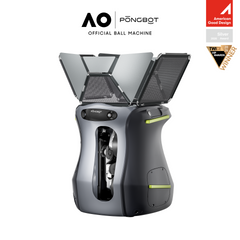
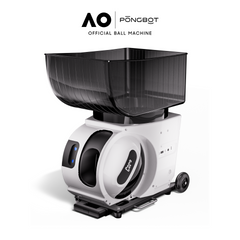
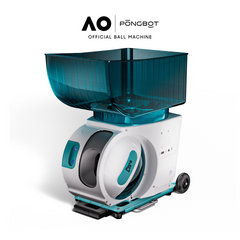
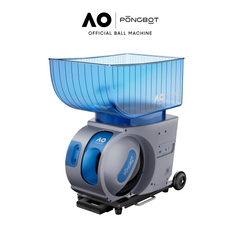
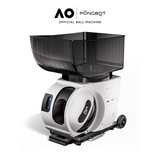
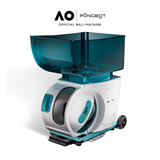
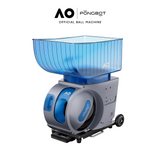
Once self-drops and wall rallies start to feel too predictable, a compact ball machine such as PongBot's Aura or the tennis-focused Pace S Pro can add repeatable, varied feeds without needing a partner or a full court.
A 20-Minute Tennis Practice Routine at Home
A short routine can be effective when you practice consistently. Use this plan three or four times per week, adjusting the drills to your skill level.
| Time | Focus | Drills |
|---|---|---|
| Minutes 1 to 4 | Warm-up | Jogging, arm circles, hip rotations, leg swings, split steps |
| Minutes 5 to 8 | Racket control | Ball taps, racket-edge control, ball tosses |
| Minutes 9 to 13 | Footwork | Side shuffles, split steps, four-corner movement |
| Minutes 14 to 17 | Groundstrokes | Shadow swings, wall rallies, self-drop shots |
| Minutes 18 to 20 | Serve and cooldown | Serve tosses, trophy position, shadow serves, stretching |
Use this as a light practice template. Extend the warm-up if you are older, returning after a break, or planning intense movement or serving. Start with easy movement, increase intensity gradually, and avoid practicing on slippery or uneven surfaces.
Use a standard tennis ball outdoors and a foam or low-compression ball indoors when appropriate for the space. Simple cones, markers, or other sports accessories can also help you create clear practice targets.
Common Mistakes During Tennis Drills at Home
Home practice works best when you focus on quality instead of rushing. Avoid these common mistakes.
- Swinging too hard: power does not fix poor timing. Start with controlled swings and increase speed only when you can make clean contact.
- Forgetting recovery footwork: do not stop after hitting the ball. Recover into a balanced ready position so recovery becomes a natural habit.
- Practicing only the forehand: a complete session should include forehands, backhands, footwork, racket control, and serve practice.
- Repeating poor technique: record a few swings from the front and side. If your form looks uncomfortable or unbalanced, slow down and make smaller changes.
- Using unsafe equipment or space: avoid full-speed hitting near windows, vehicles, or other people, and use foam or low-compression balls for indoor drills.
How to Track Progress With Home Tennis Practice
Tracking your results makes practice more motivating. Use simple numbers that show whether your control and consistency are improving.
| Skill | What to track |
|---|---|
| Wall rallies | Longest rally |
| Target hitting | Successful shots out of 20 |
| Racket control | Consecutive taps |
| Serve toss | Accurate tosses out of 10 |
| Footwork | Repetitions in 30 seconds |
| Technique | Balance, preparation, and finish on video |
These numbers are personal practice measures, not official skill ratings. Record a short video every few weeks and look for better balance, earlier preparation, cleaner contact, and faster recovery.
Home drills are useful for repetition, but court practice is still needed for live-ball timing, serving, returning, rallying, and match strategy.
The best tennis drills at home are simple enough to repeat and focused enough to improve a real skill. Start with racket control, footwork, groundstrokes, and serve motion, then track your progress each week. Warm up gradually and stop if you feel sharp, worsening, or unusual pain. If pain continues, consult a qualified medical professional. Safe equipment, such as suitable tennis balls and helpful sports accessories, can make practice more enjoyable, and you can check PongBot's official website for current tennis and pickleball equipment options.


