
















Quick Tip: Tennis rewards patience over power. As a beginner, keeping the ball in play and moving your feet before every swing will beat players who swing hard and miss half their shots.
Learning how to play tennis is one of the most rewarding athletic pursuits you can start at any age. The basics are simple enough to grasp in a single session — and the game gives back for decades after. Whether you're picking up a racket for the first time or returning after years away, this guide covers everything you need to know about how to play tennis, from the court layout to your first real rally.
- Tennis is played on a rectangular court divided by a net, in singles or doubles format
- Scoring runs: Love (0) → 15 → 30 → 40 → Game, with deuce rules when tied at 40-40
- Four essential strokes: forehand, backhand, serve, and volley
- A proper grip, court shoes, and a forgiving racket are the three non-negotiable pieces of equipment
- Solo training with a ball machine accelerates development faster than rallies alone
What Is Tennis?

Tennis is a racket sport played on a rectangular court divided by a net. Players hit a felt-covered ball over the net and into the opponent's court — win the point if they can't return it. It can be played as singles (one vs. one) or doubles (two vs. two), on hard court, clay, or grass, indoors or outdoors.
The game was formalised in Birmingham, England in the 1870s and is now played by more than 87 million people across over 200 countries. That breadth is a testament to how accessible the basics are — and how deep the game goes once you're in it. According to Livestrong's history of tennis, the sport traces its roots to a 12th-century French game called "jeu de paume," where players used their hands to hit a ball over a line strung between trees — long before rackets were ever introduced.
The Tennis Court: Know the Layout First
Before learning how to play tennis, you need to understand where everything happens:
- Court dimensions: 23.77m long × 8.23m wide (singles) or 10.97m (doubles)
- Net height: 0.914m at the centre, 1.07m at the posts
- Baseline: The back line — most rallies are initiated and decided here
- Service boxes: The two diagonal boxes each side where a serve must land
- No-man's land: The mid-court zone between the baseline and service line — avoid lingering here as balls become much harder to handle
- Alley: The narrow strips on each side used only in doubles play
The net is lowest at the centre — which means aiming at the middle of the net on your shots gives you the largest margin for error, especially as a beginner.
Tennis Equipment: What You Actually Need

You need surprisingly little to start playing tennis. The three essentials:
Racket: Choose a racket with a large head size (100+ square inches) and lightweight frame (260–300g unstrung). A generous sweet spot forgives off-centre hits, and a light weight reduces arm fatigue while you develop your swing. Avoid buying the cheapest racket available — poorly constructed frames can cause tennis elbow even in casual play. Stocking up on the right tennis court essentials — racket, shoes, and a few cans of balls — is the smartest first investment a new player can make.
Court shoes: Lateral movement is fundamental to tennis, and running shoes aren't designed for it. Tennis shoes have reinforced soles and side support that prevents ankle rolls during the quick direction changes the sport demands.
Tennis balls: Standard felt-covered balls work on any hard court or clay surface. For practice on a hard wall or driveway, pressureless balls last longer.
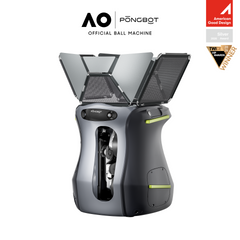
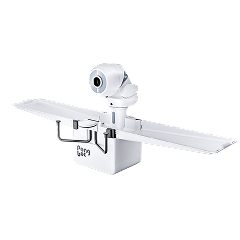
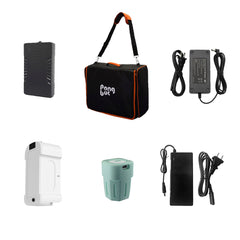
 Pace S Series AI-powered multi-sport ball machines for tennis, pickleball, and padel — with movement tracking and adaptive drill modes. Shop Now Flagship
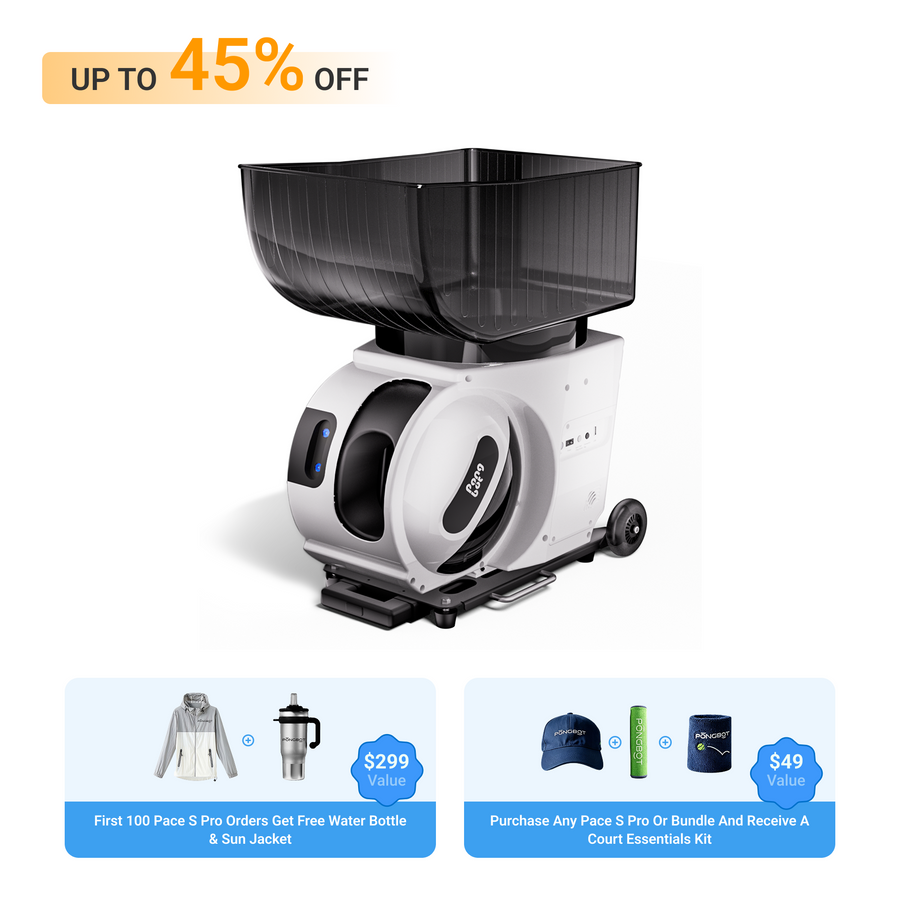 Pace S Pro Advanced AI ball machine with Recovery Trigger, Adaptive Rally, Match Challenge, and Arena of Dash modes. View Product
The Basic Rules of Tennis
The Serve
Every point starts with a serve. Here's how it works:
- The server stands behind the baseline on the right side (deuce court) for the first point
- The serve must land in the diagonal service box on the opposite side
- The server gets two attempts — missing both is a double fault, and the opponent wins the point
- If the serve clips the net but still lands in, it's called a let and is replayed
- After each point, the server alternates sides: right, then left, then right, and so on
Rallying and the Double-Bounce Rule
After the serve, players hit the ball back and forth over the net. The key rule: the ball must bounce once on your side before you return it — unless you're volleying at the net. Once the ball bounces, you can let it bounce again and still play it (though by then it's usually dying). Hit the ball before it bounces a second time, or the point is lost. html
Winning a Point
You win a point when your opponent:
- Hits the ball into the net
- Hits the ball out of bounds
- Lets the ball bounce twice before returning it
- Touches the net with racket or body while the ball is in play
- Double-faults on serve
How to Score in Tennis
Tennis scoring confuses most beginners — the sequence is Love (0) → 15 → 30 → 40 → Game. The table below breaks it down:
| Points Won | Score Called |
|---|---|
| 0 | Love |
| 1 | 15 |
| 2 | 30 |
| 3 | 40 |
| 4 (by 2) | Game |
Deuce (40-40): When both players reach 40, it's deuce. From deuce, a player must win two consecutive points — first to take the advantage, then to win the game. Lose the advantage point and it returns to deuce. This can theoretically continue indefinitely.
Games: First to 6 games wins a set, with a minimum 2-game margin required. If the set reaches 6-6, most competitions play a tiebreak (first to 7 points, win by 2).
Sets and Matches: Recreational matches are typically best of 3 sets (first to 2 set wins). Professional and Grand Slam formats vary — men's singles at Grand Slams is best of 5 sets.
The Four Essential Strokes
Once you understand how to play tennis from a rules standpoint, these are the four strokes that form the foundation of your game. Beyond the physical technique, regular tennis play delivers measurable health benefits — the sport burns calories, improves aerobic fitness, and builds bone density, making it one of the most complete forms of exercise available. Better Health Victoria's overview of tennis's health benefits highlights cardiovascular gains, agility improvements, and mental sharpness as key factors that keep players returning decade after decade.
The Forehand
The forehand is your most natural shot — hit with your dominant hand on the same side as the incoming ball. It's also the shot you'll hit most often, so developing a reliable forehand early pays off enormously.
The key mechanics: a relaxed grip (think of shaking hands with the racket), weight shifting onto your front foot, and a low-to-high swing path that generates topspin. Keep your eyes on the ball all the way to your strings — looking up early is the most common cause of mishits.
The Backhand
The backhand is hit on the opposite side to your dominant hand. Most beginners find a two-handed backhand easier to control — the second hand provides stability and reduces the technical demand on timing.
Work toward a compact take-back and a forward swing that brushes up the back of the ball. The two-handed backhand tends to be more consistent under pressure, while a one-handed backhand offers greater reach and more freedom on high balls.
The Serve
The serve is the most tec htmlhnically demanding stroke in tennis — and the only one you fully control without an opponent's input. As a beginner, prioritise consistency over power. A reliable first serve that lands in the service box is worth far more than a 200km/h ace that misses.
The checklist for a simple, repeatable serve motion: continental grip (like holding a hammer), ball tossed to roughly 1 o'clock if you're right-handed, full arm extension at contact, and a smooth follow-through across your body. Practice the motion without a ball first to groove the pattern. Using an AI-powered tennis ball machine for serve-and-return sequences builds muscle memory for the contact point without needing a practice partner.
The Volley
A volley is a shot hit in the air before the ball bounces — typically when you're at the net. The key difference from groundstrokes: you don't wait for a bounce, and you don't take a full swing. Instead, use a short, punching motion with the racket face aimed downward to dip the ball over the net.
Volleys are about placement and feel, not power. Keep the racket out in front, stay balanced, and let the incoming ball's pace do most of the work. The overhead smash handles high balls above your head — get into position early and hit down through the ball with a motion similar to the serve.
Pace S Series AI-powered multi-sport ball machine — set random modes to build real decision-making under mat htmlch-like pressure. Shop Now  Pace S 396 preset drills, app control, and full court coverage — for consistent solo training sessions. View Product
Common Beginner Mistakes and How to Avoid Them
- Watching the ball: The single biggest fix for most beginners. Keep your eyes on the ball from your opponent's strings all the way to your own contact point. Every time you look up early, you miss the ball or hit it in the wrong direction.
- Standing flat-footed: Tennis demands constant readiness. Stay on the balls of your feet, knees slightly bent, ready to move in any direction the moment your opponent hits.
- Chasing the net without a plan: Moving to the net is a powerful strategy, but rushing it from the baseline without setting up the point first hands your opponent an easy passing shot.
- Hitting every ball as hard as possible: Power without control creates winners for your opponent. At beginner level, consistency wins more points than raw pace. Hit 80% of your capability with precision, and you'll beat players who go for 100% and miss half their shots.
Building Your Game with Purposeful Practice
Understanding how to play tennis intellectually is one thing. Building the coordination to do it under pressure is another — and that requires deliberate, repetitive practice.
- Hit against a wall or backboard: The simplest solo t htmlraining available. Start close, focus on clean contact, and gradually move back as consistency improves. A wall doesn't judge, and it never gets tired.
- Use a ball machine: This is where most players accelerate fastest. A ball machine delivers the same feed repeatedly — the consistency lets you groove technique without the variability of a human partner. You control pace, spin, and placement. Vary the settings each session to build adaptability alongside consistency.
- Drill the serve separately: Serve practice is often neglected because you need someone to feed you balls. A ball machine with random feed modes simulates point-start conditions, letting you practice serve and return sequences without a partner.
- Watch and learn: Study professional matches — not for the power, but for the patterns. How do players construct points? Where do they aim when under pressure? Tactical awareness is a force multiplier on every other skill you develop.
Once you've established a consistent rally rhythm, investing in a quality tennis ball picker or hopper makes solo practice sessions significantly more efficient — spend more time hitting and less time walking back and forth to collect balls.
Conclusion: How to Play Tennis
Tennis rewards patience. The basics — scoring, serving, rallying — take one or two sessions to understand. Developing a reliable game takes months. Mastering it takes years. That's the nature of a sport where the court is your canvas and every opponent forces a different problem.
The principles that matter most as a beginner: keep the ball in play, move your feet before you swing, watch the ball to contact, and invest in deliberate practice over casual hitting. A ball machine gives you the repetition density that casual games c htmlan't — same feeds, same patterns, measurable progress session by session.
Ready to start? Pick up a forgiving racket, find a court, and give yourself permission to be a beginner. The game is waiting.
Recommended Read: 9 Tennis Forehand Drills to Build Power and Consistency →
Frequently Asked Questions
How long does it take to learn tennis?
Most beginners can sustain a short rally and understand the basic rules within their first two to three sessions. Playing a complete match comfortably typically takes 3–6 months of regular practice. Tennis is a sport that keeps giving for years — the learning curve flattens but never fully plateaus.
Is tennis difficult for beginners?
Tennis has a steeper initial learning curve than sports like pickleball or padel, mainly because of the serve mechanics and court dimensions. That said, the core satisfaction of rallying and point construction is accessible within the first few sessions. A good beginner racket, proper court shoes, and ideally a few coaching sessions make a significant difference in how quickly you progress.
What is the scoring system in tennis?
Points are called Love (0), 15, 30, 40, then Game. If both players reach 40 (deuce), a player must win two consecutive points — first the advantage, then the game. Sets are won by reaching 6 games with a 2-game margin (tiebreak at 6-6). Matches are typically best of 3 sets.
What equipment do I need to start playing tennis?
The three non-negotiable items: a racket with a large head size (100+ sq in) for forgiveness, court-specific shoes with lateral support, and standard tennis balls. Everything else is optional. Many clubs and public courts rent equipment for first-timers.
Can I teach myself tennis without a coach?
You can learn the fundamentals through wall practice, online tutorials, and deliberate self-drilling. However, even three to five sessions with a qualified coach corrects grip issues, stance habits, and swing path errors that are very difficult to identify and fix alone. A coach accelerates what self-teaching takes months to discover.
What is the double-bounce rule in tennis?
After the serve, the receiving team must let the ball bounce once before returning it. The serving team then also lets the ball bounce once on their side before returning. After those two bounces, players can choose to volley (hit before the bounce) or let it bounce and hit after. This two-bounce rule governs all standard tennis rallies.


