









At NTRP 4.0 and above, your strokes are already built. A machine that feeds the same ball to the same spot trains nothing you need. What you're missing is court positioning under pressure, shot selection when tired, and the ability to absorb pace and spin changes mid-rally.
Those are the criteria this guide is built around.
- Minimum viable specs for 4.0+: 70 mph ball speed, 40+ rps spin, full sideline-to-sideline coverage.
- Spin switching under 2 seconds is what makes sequences feel unpredictable rather than scripted.
- AI movement tracking trains recovery footwork — the single biggest gap in solo practice.
- Custom multi-shot programming matters more than preset drill count at this level.
- The PONGBOT Pace S Pro is our pick; the Spinfire Pro 2 is the strongest non-AI alternative.
Why Advanced Players Need a Different Machine
Beginner and intermediate machines solve a volume problem — they give you reps. That's genuinely useful when your forehand is still inconsistent.
At 4.0+, volume isn't the constraint. You can already hit 200 clean forehands. What you can't do alone is practise the decision layer: reading a ball early, choosing the right shot, and recovering to the correct position before the next one arrives.
That requires a machine that changes its output based on what you do. Everything below is a proxy for that capability.
The Spec Floor for 4.0+ Training
| Spec | Minimum | Ideal | Why It Matters |
|---|---|---|---|
| Ball speed | 70 mph | 80 mph | Matches competitive rally pace |
| Spin rate | 40 rps | 60 rps | Heavy topspin forces high contact points |
| Spin switch time | Under 3 sec | Under 2 sec | Unpredictable topspin/slice mixing |
| Court coverage | Baseline width | Sideline to net | Trains lateral recovery |
| Feed interval | 2 sec | 1.5 sec or faster | Compresses recovery time |
| Custom drills | 6-shot sequences | Unlimited | Lets you build match scenarios |
| Battery life | 4 hours | 8+ hours | Multiple sessions without recharge |
Top Pick: PONGBOT Pace S Pro

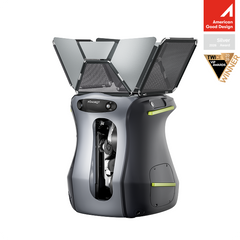
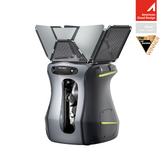
The Pace S Pro clears every threshold in the table above. 80 mph top speed, 60 rps spin with roughly 1.5-second switching, and full coverage to both sidelines and the net.
What actually separates it for advanced players is the movement tracking. The machine knows where you are on court and places the next ball accordingly, which turns a feed session into something closer to a rally.
The Four Modes That Matter at 4.0+
- Recovery Trigger — holds the next feed until you've repositioned. Trains the split-step-and-recover habit that solo practice normally destroys.
- Adaptive Rally — reads your court position and places the next ball to the space you've vacated. The closer you get to correct recovery, the harder it works to find you.
- Match Challenge — simulates an opponent at a set NTRP level, scaling up to 7.0. Rally lengths, pace, and shot selection shift to match the profile.
- Arena of Dash — pure agility and endurance work with a ranked leaderboard. Useful for conditioning blocks where the goal is fatigue, not technique.
Beyond the AI modes, the machine ships with a large preset drill library and full custom sequence creation through the app. At this level the custom builder matters more than the presets — you already know which situations you lose, and being able to program them directly is the point.
Runner-Up: Spinfire Pro 2
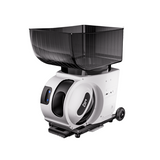
If you'd rather not manage an app mid-session, the Spinfire Pro 2 is the strongest non-AI option. It hits 80 mph, produces genuinely heavy spin, and has a long track record for durability under club-level use.
You get 6-shot programmable sequences, which is enough to build meaningful drills — wide forehand, short ball, approach, volley — even without adaptive logic. What you don't get is any response to your movement. The machine runs its pattern regardless of where you are.
That's a real limitation for decision training, but a non-issue if you're primarily after high-quality repetition at pace.
How to Structure an Advanced Session
| Block | Duration | Setting | Goal |
|---|---|---|---|
| Warm-up | 10 min | Fixed feed, 55–60 mph, centre | Groove contact point |
| Movement | 15 min | Two-line alternation, 70 mph | Lateral recovery under pace |
| Sequence work | 15 min | Custom 4–6 shot patterns | Transition and approach |
| Match simulation | 20–30 min | Adaptive / Match Challenge | Decisions under fatigue |
| Weakness block | 10 min | Targeted single pattern | Fix one specific gap |
The order matters. Match simulation goes late deliberately — you want to be tired when you're making decisions, because that's the state you're in when matches are decided.
What a Ball Machine Still Won't Do
- Disguise a shot. No machine hides its intention the way a player does. You'll always get an earlier read than you would in a match.
- Exploit your weakness adaptively across a match. AI modes adjust difficulty, but they don't form a game plan against you the way an opponent does after two service games.
- Replicate serve return. Trajectory and toss cues are absent, so return practice against a machine is partial at best.
- Create scoreboard pressure. The mental side of 4.0+ tennis is only trainable in competition.
The honest framing: a machine handles volume, movement, and pattern work better than any hitting partner. A partner handles disguise, tactics, and pressure better than any machine. Advanced players need both.
Frequently Asked Questions
What is the best tennis ball machine for advanced players?
Advanced players need 70+ mph speed, full spin control, spin switching under two seconds, and ideally AI movement tracking. Match simulation and custom drill programming matter more than preset drill count, because at 4.0+ you already know which situations you need to rehearse.
Is an AI ball machine worth it for a 4.0+ player?
Yes, more so than for a beginner. At this level improvement comes from footwork, shot selection, and adaptability rather than stroke mechanics. Machines that track your position and adapt in real time target exactly those areas. A fixed-feed machine can't, regardless of how fast it hits.
How fast should a ball machine be for advanced training?
70 mph is the practical floor; 80 mph simulates competitive pace. But speed alone is misleading — feed interval, spin rate, and court coverage determine how difficult a session actually is. A 70 mph machine with 1.5-second intervals is harder than an 80 mph machine feeding every three seconds.
Can a ball machine replace a hitting partner?
Not entirely. A partner provides disguise, tactical adaptation, and genuine unpredictability. An AI machine with match simulation gets closer than previous technology, but the best approach uses both — machine work for volume and targeted patterns, partner work for live-ball tactics.
What drills should advanced players do with a ball machine?
Multi-shot sequences that force movement and recovery: wide forehand into short-ball attack, deep random-placement baseline rallies, approach-and-volley patterns, and defensive retrieves from behind the baseline. Use match simulation for rally-length endurance and reserve a block for one specific weakness each session.
How many balls should an advanced machine hold?
Look for at least 100–150. At fast feed intervals a smaller hopper empties in under four minutes, which breaks up drill blocks and interrupts the fatigue you're trying to build. Larger capacity matters more at advanced pace than it does for casual practice.
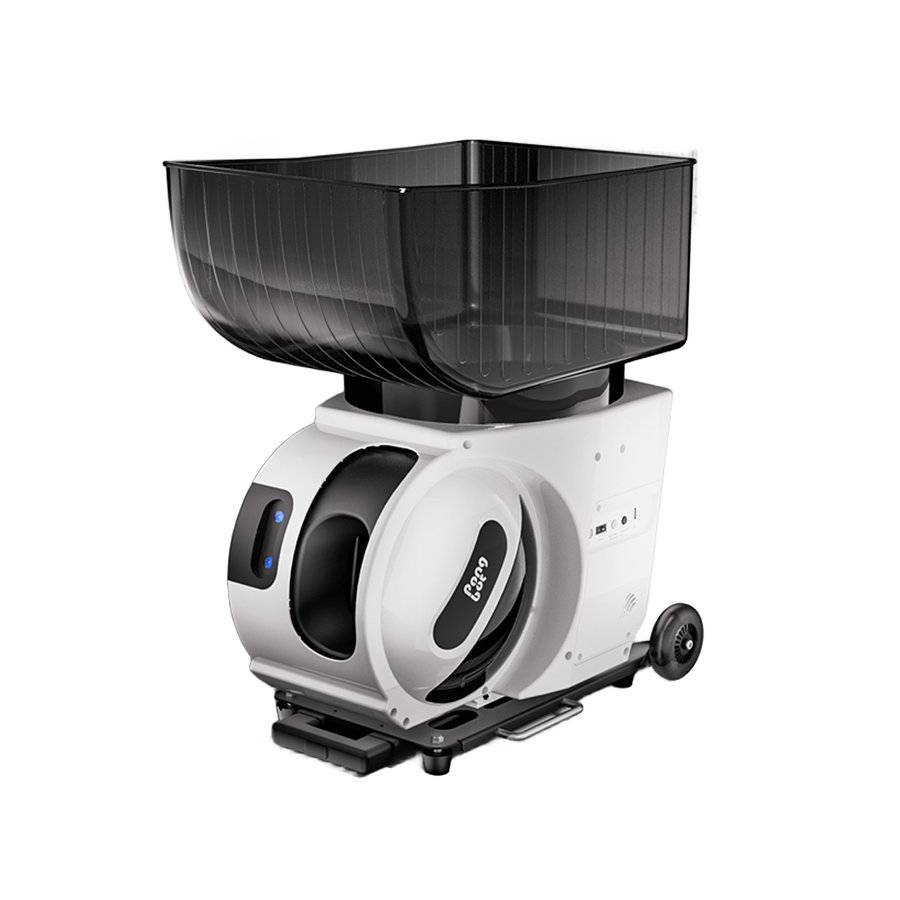
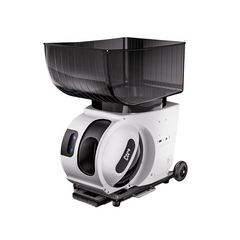
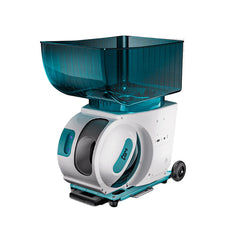
AI tennis ball machine with 80 mph feeds, up to 60 rps spin, 564+ drills, and app control.
View ProductTable Tennis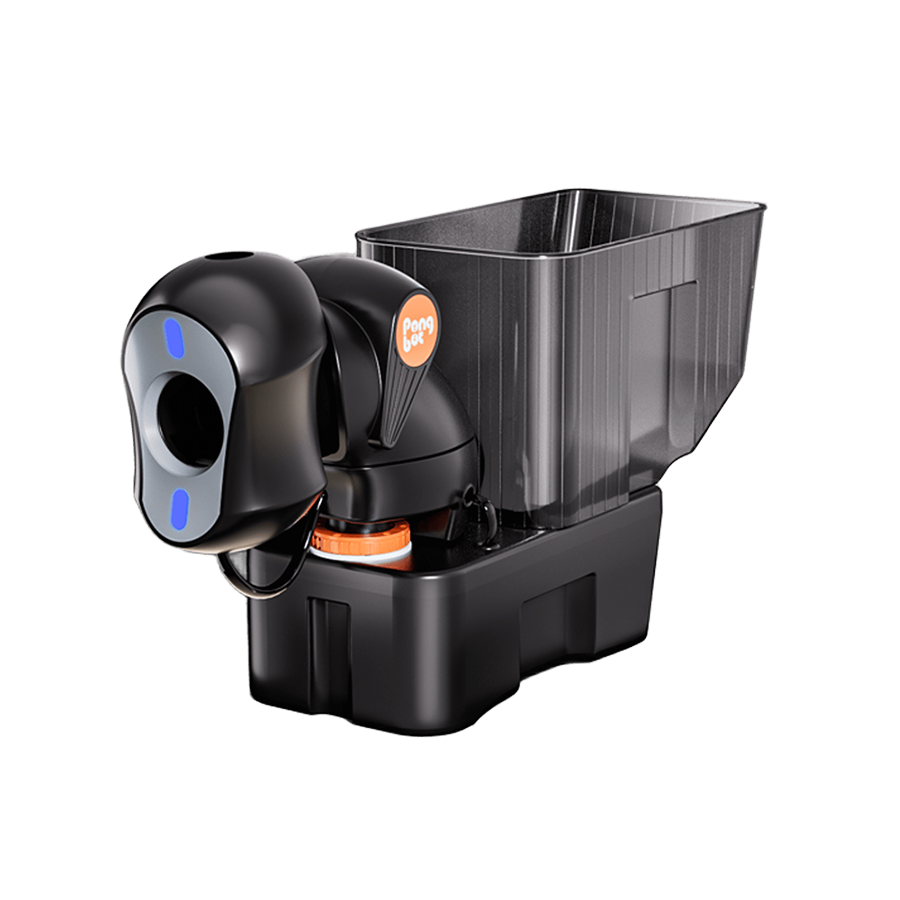
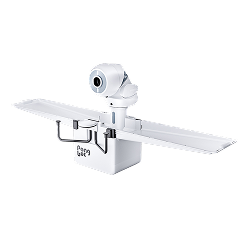
Portable table tennis robot with 264+ drills, app control, nine spin variations, and 150-ball capacity.
View ProductAccessory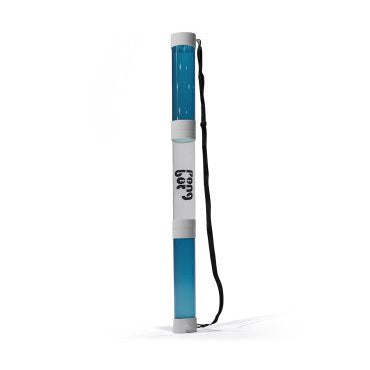
Lightweight ball picker for tennis, pickleball, and padel that holds up to 18 balls.
Shop NowThe Bottom Line
For NTRP 4.0+, the deciding factor isn't top speed — most serious machines reach 70–80 mph. It's whether the machine reacts to you. Movement tracking and adaptive placement are what turn feeding into training.
The Pace S Pro is our pick for that reason. If you'd rather have a proven mechanical workhorse with no app dependency, the Spinfire Pro 2 does the job well.


