


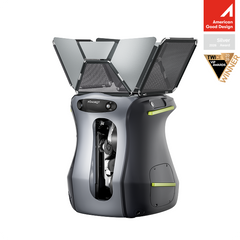
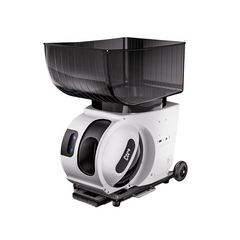
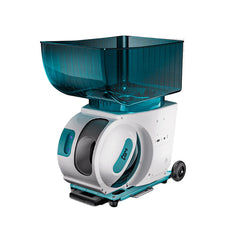

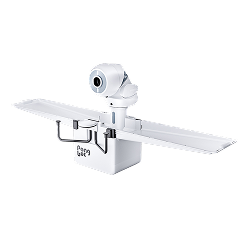


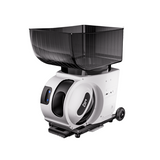
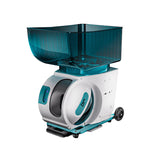





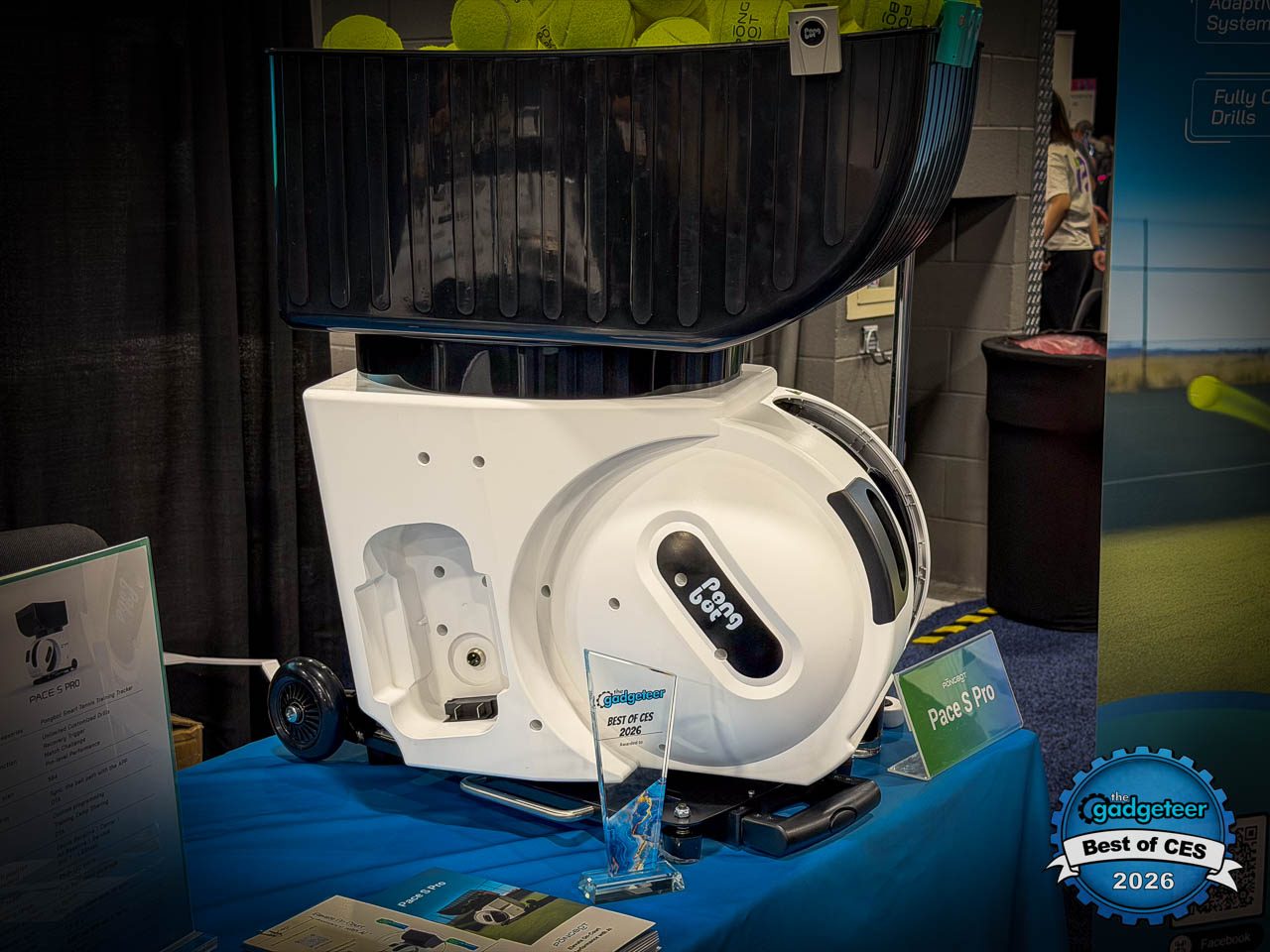
Traditional tennis ball machines are built around repetition: set the speed, choose the placement, and hit the next ball when it arrives. But real tennis demands something different. Players have to read the ball, move, recover, and prepare for whatever comes next. In its CES 2026 coverage, The Gadgeteer explored how the Pongbot Pace S Pro takes a different approach by making the training robot respond to the player rather than forcing the player to follow a fixed rhythm.
A Training Robot That Waits Until You're Ready
The central idea behind Pace S Pro is simple: instead of automatically firing the next ball on a timer, the system can track the player's position and wait for the player to recover before continuing the drill.
Why Traditional Ball Machines Can Feel Different From Real Tennis
A conventional ball machine is very good at delivering repeatable shots. That makes it useful for stroke repetition and technical practice, but fixed timing can also remove an important part of tennis: the need to recover and prepare for the next shot.
In a real rally, players don't always have the same amount of time between shots. A wide ball may require a longer recovery, while a shorter ball can demand a faster transition forward. The timing of the next shot is connected to what happened before it.
Pace S Pro approaches solo training with this idea in mind. Instead of asking the player to match the machine's rhythm, its movement-tracking system allows the machine to respond to the player's position.
Ultra Wideband Player Tracking
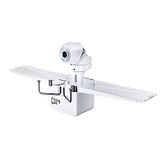
One of the key technologies highlighted by The Gadgeteer is Ultra Wideband, or UWB, player tracking. Unlike camera-based tracking, UWB does not depend on visible lighting conditions to determine player position.
100 Hz Tracking
Pace S Pro samples player position at 100 Hz, allowing the system to continuously monitor movement during training.
Sub-10 cm Accuracy
The system is designed to track player position with accuracy within 10 centimeters, providing detailed information for movement-based training.
Lighting Independent
UWB tracking operates independently of lighting conditions, making the tracking system suitable for both indoor and outdoor practice environments.
Real-Time Movement Data
Player-position information can be used by the training system to determine when the player has returned to the appropriate position.
Recovery Trigger: The Machine Waits for You
This tracking capability powers Pace S Pro's Recovery Trigger technology. After a shot, the system monitors the player's movement toward a designated recovery position.
Instead of immediately launching another ball according to a fixed timer, the machine waits until the player has recovered before delivering the next feed.
The result is a different training rhythm. Players have to complete the movement required by the drill before the next shot arrives, making recovery and positioning an active part of the exercise.
The Pace S Pro does not simply deliver the next ball. It uses player movement to determine when the next part of the drill should happen.
What This Changes on the Court
The difference becomes particularly noticeable in movement-based drills. Consider a simple forehand exercise where the player moves toward the sideline before recovering to the center of the baseline.
With a fixed-timing machine, the next ball arrives whether the player has recovered or not. With Recovery Trigger, the next feed can wait until the player returns to the designated recovery zone.
This turns recovery into part of the drill rather than something the player has to remember independently.
Movement
Players must move to the required position to complete the exercise.
Recovery
Returning to the recovery zone becomes part of the sequence before the next feed.
Readiness
Players have to establish their ready position instead of simply waiting for a timer.
Consistency
Repeating the movement pattern can reinforce better recovery habits over time.
Beyond Recovery: Match Challenge and Adaptive Training
Recovery Trigger is only one part of Pace S Pro's adaptive training system. The machine also includes Adaptive Rally and Match Challenge modes designed to introduce greater variability into solo practice.
Match Challenge uses varied shot sequences and player-position information to create training scenarios that are intended to feel more like point play rather than a simple sequence of identical feeds.
The current Pace S Pro platform also offers more than 564 preset drills, alongside custom drill creation through the app. Players can adjust variables such as speed, spin, placement, trajectory, and timing to create sessions around specific training goals. :contentReference[oaicite:1]{index=1}
Pro-Level Speed and Spin
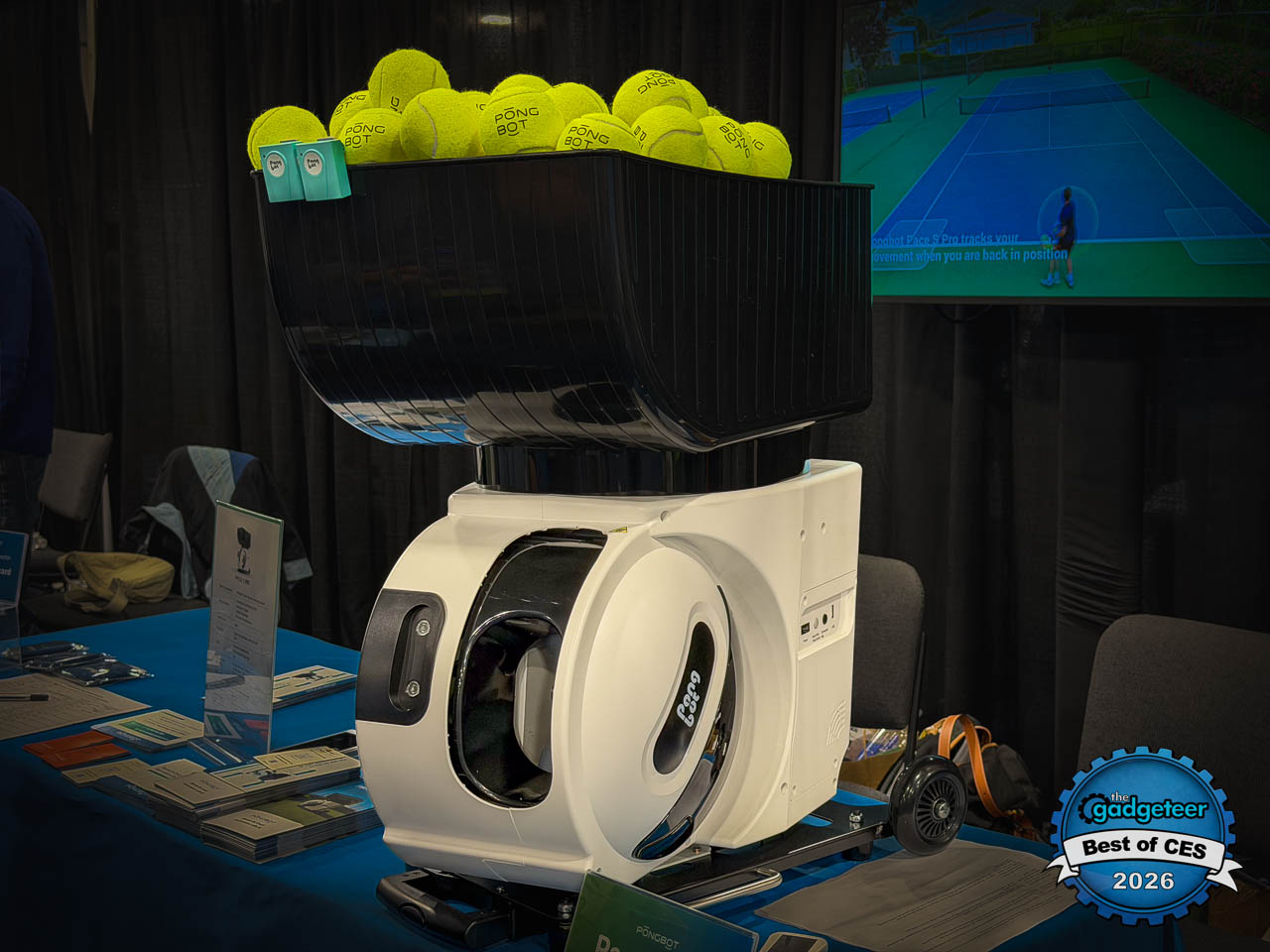
The adaptive features are supported by the machine's ball-delivery capabilities. Pace S Pro can reach speeds of up to 80 mph and generate up to 60 rps of spin, giving players a broad range of training intensities. :contentReference[oaicite:2]{index=2}
The system can also switch between spin types quickly, allowing training sessions to move between different ball characteristics rather than relying on a single repetitive feed.
Full-court coverage further expands the range of training scenarios, from baseline rallies and lateral movement to higher balls and shorter placements. :contentReference[oaicite:3]{index=3}
A Training Library That Goes Beyond Fixed Programs
Pace S Pro includes a large collection of pre-programmed drills, but the training system is not limited to those preset routines.
Through the app, players can create custom drills and adjust the parameters of individual feeds. This makes it possible to build sessions around a specific weakness, movement pattern, shot combination, or preferred training intensity.
The app also supports sharing and downloading drills, creating a broader training ecosystem where players can discover routines beyond the programs included with the machine. :contentReference[oaicite:4]{index=4}
Who Can Benefit From This Approach?
Beginners
Recovery Trigger can help beginners practice movement and positioning without being forced to keep up with a rigid ball-feeding schedule.
Recreational Players
Players who regularly train alone can use adaptive drills to make practice more structured and varied.
Advanced Players
Higher-level players can use speed, spin, movement tracking, and match-oriented training to build more demanding practice sessions.
Not a Replacement for Match Play or Coaching
The Gadgeteer also makes an important distinction: an AI training robot is not a replacement for playing against a real opponent or working with a coach.
Live opponents introduce unpredictability, decision-making, pressure, and competitive dynamics that a machine cannot completely reproduce. Coaches provide observation, technical feedback, and adjustments that go beyond automated training.
Instead, the Pace S Pro is designed to fill the gap between those experiences. For players who spend a significant amount of time training alone, it can provide a more structured way to use that court time.
From Repetition to Responsive Practice
The central idea behind Pace S Pro is not simply adding more technology to a tennis ball machine. It is changing the relationship between the machine and the player.
Traditional machines determine when the next ball arrives. Pace S Pro can use player movement to determine when the player is ready for it.
That shift makes recovery, positioning, and movement part of the training loop—creating a practice experience designed around how the player actually moves on court.
Explore Pongbot Pace S Pro
With movement tracking, Recovery Trigger, Match Challenge, extensive preset drills, custom training options, and pro-level speed and spin, Pace S Pro is designed for players who want more from their solo practice sessions.
Train at Your Own Rhythm
Discover Pace S Pro and explore a more responsive approach to tennis training, where the machine can track your movement, wait for your recovery, and adapt the session around you.
Explore Pace S ProArticle from The Gadgeteer: Pongbot Pace S Pro Is the AI Tennis Training Robot That Waits Until You’re Ready Before Firing the Next Ball
The article was written by Vincent Nguyen and published January 8, 2026.


