
















Quick Tip: Don't memorise — follow. Walk through one full game point by point and the scoring system clicks faster than any rulebook.
Nothing kills a beginner's first tennis experience faster than the scoring system. While other sports count 1, 2, 3, tennis goes 15, 30, 40 — and that's only the start. This guide strips away the confusion and walks you through every level of tennis scoring, from a single point to a full match, with real examples at each step.
- Points escalate: Love (0) → 15 → 30 → 40 → Game
- You must win a game by 2 points — deuce kicks in at 40-40
- A set is first to 6 games with a 2-game lead; a tiebreak decides 6-6
- A match is best of 3 sets in most amateur play
- The best way to learn it: walk through one full game, point by point
How Points Are Scored: The Basics

Each rally in tennis is a contest for one point. You win a point when your opponent fails to return the ball legally. That means:
- The ball lands outside the court lines
- The ball hits the net and doesn't cross over
- The opponent swings and misses entirely
- The ball bounces twice before your opponent can hit it
- Your opponent touches the net, net post, or crosses onto your side while the ball is in play
When the server wins a point, it's written with the server's score first. So "30-15" means the server has 2 points, the receiver has 1. In score-calling, always say the server's score first. Having the right tennis court essentials — a reliable score counter, a court marker, and comfortable court shoes — keeps you focused on the game rather than fumbling with equipment between points.
Game Scoring: The 15-30-40 Sequence
A game is a sequence of points until one player wins 4 — but with a crucial rule: you must win by 2. The sequence runs in a non-linear way that confuses every beginner:
| Points Won in Game | Score Called | What It Means |
|---|---|---|
| 0 | Love | Zero points — "Love-All" when both are at 0 |
| 1 | 15 | Server leads 1-0 |
| 2 | 30 | Server leads 2-0, or score is 30-15 |
| 3 | 40 | Server leads 3-0, or 40-15, or 40-30 |
| 4 (by 2+ points) | Game | Game won — reset to Love for next game |
The reason it jumps from 30 to 40 (skipping 45) is historical — the original scoring used a clock face, with each point representing a quarter of the clock: 15, 30, 45. The 45 was shortened to 40 at some point, and the sequence stuck. As the Wikipedia article on tennis scoring documents, this clock-based system dates back to the French medieval game jeu de paume, where players accumulated points in 15-point increments — a method that survived centuries into modern tennis.
Deuce: When 40-40 Happens
If both players reach 40 — meaning each has won at least 3 points — the score is called deuce. From deuce, you must win two consecutive points to take the game:
- Point 1 after deuce: Player A wins → score is "Advantage A"
- Point 2: If A wins again → A takes the game
- Point 2: If B wins → score returns to deuce
This can theoretically go on forever. In practice, most recreational games are decided within 2-4 deuce cycles, though extended deuce battles are part of what makes tennis dramatic. Practising deuce scenarios with an AI-powered tennis ball machine lets you simulate pressure situations and drill the mental focus that deuce points demand.
No-Ad Scoring (Optional Format)
Some clubs and social matches use a faster format called no-ad or fast4 scoring. In no-ad, when the game reaches deuce, the next point decides the game — no advantage, no extended deuce. Always confirm before a match which scoring format is in use.
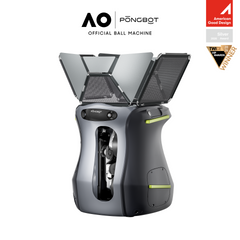
 Pace S Series Program game-simulation drills that cycle through realistic point scenarios — build score awareness while you train. Shop Now Flagship Pace S Pro Adaptive Rally mode simulates full point sequences — from serve to rally to deciding point, with AI-controlled pace and spin. View Product
Set Scoring: First to 6 Games
Once you've won a game, you need to win multiple games to win a set. A set is a sequence of games, and the first player to reach 6 games with a 2-game lead wins the set.
| Example Scores | Set Status | Why |
|---|---|---|
| 6-0, 6-1, 6-2, 6-3, 6-4 | Set over | Winner has 6, loser has 0-4 — 2-game gap achieved |
| 5-5 | Continue playing | 5-5 is not a 2-game gap — must reach 7 or go to 6-6 |
| 7-5 | Set over | Winner reached 7 games — loser has 5 (2-game gap) |
| 6-6 | Tiebreak triggered | No 2-game gap at 6-6 — tiebreak decides the set |
Tiebreaks: Deciding Sets at 6-6
When a set reaches 6-6, most competitions play a tiebreak. Here's how a standard tiebreak works:
- Points are scored 1, 2, 3... (not 15-30-40)
- First player to reach 7 points with a 2-point lead wins the tiebreak 7-5, 8-6, etc.
- The tiebreak counts as 1 game — so the final set score is 7-6
- The player who served first in the set serves the first point, then serves 2 points, then alternates every 2 points
Tiebreak rules can vary slightly between professional tours and amateur formats — some Grand Slams use a tiebreak at 6-6 in the final set, while others continue playing until a 2-game gap is reached. According to Sports Illustrated's tennis coverage, the tiebreak was introduced in the 1970s specifically to prevent the marathon sets that had become a fixture of the sport, and its adoption varies significantly across different competitive levels.
A Complete Game Walkthrough: Point by Point

The best way to understand tennis scoring is to follow one. Here's a full game from 0-0 to completion. Player A is serving:
| Point | Event | Score | Notes |
|---|---|---|---|
| 1 | A wins rally | 15-Love | A leads 1-0 |
| 2 | B wins rally | 15-15 | Even at 1-1 points |
| 3 | A wins rally | 30-15 | A leads 2-1 |
| 4 | B wins rally | 30-30 | Even at 2-2 |
| 5 | A double faults | 30-40 | B has game point — one more B point wins the game |
| 6 | A wins rally (survives game point) | Deuce | Back to 3-3 points — must win by 2 from here |
| 7 | A wins rally (Advantage) | Adv A | A needs one more point to win the game |
| 8 | A wins rally | Game A | A wins the game 4-3 (after deuce) |
Match Scoring: Sets into a Match
| Match Format | Sets to Win | Typical Use |
|---|---|---|
| Best of 3 sets | 2 sets | Recreational play, WTA, most ATP events |
| Best of 5 sets | 3 sets | Grand Slam men's singles |
| Fast4 / no-ad | 2 sets + tiebreak | Social formats |
Serving Rotation in a Set
Each game within a set has one server. Games alternate: if Player A serves the first game, Player B serves the second, A serves the third, and so on. In doubles, both partners serve in rotation within their team's service games. Using a tennis ball picker or hopper between games keeps the court clear and your rhythm uninterrupted during serving rotations.
Pace S Series Set the machine to game-point mode — random feeds that force you to convert or lose, building pressure tolerance in every session. Shop Now  Pace S 396 preset drills and app control — for structured solo sessions that reinforce court positioning and rule awareness. View Product
Why Tennis Scoring Seems Complicated (And Why It Isn't)
Tennis scoring is designed to create drama. The non-linear point system, th htmle deuce rule, and the set/tiebreak structure all exist to ensure that the result is rarely determined until late in a match.
The key to internalising it is understanding the three rules that drive everything:
- 4 points by 2 = game (Love → 15 → 30 → 40, deuce if tied at 40-40)
- 6 games by 2 = set (tiebreak at 6-6 in most formats)
- 2 sets (or 3 in Slams) = match
Conclusion: Tennis Scoring for Beginners
Tennis scoring is the most intimidating part of the game for beginners, but it follows a simple logical structure once you see through the odd numbers. Four points by two wins a game; six games by two wins a set; two sets wins a match. The complexity emerges from the exceptions — deuce, tiebreaks, extended sets — not from the core structure.
The fastest way to internalise it is through repetition: walk through a full game point by point, then a full set, then a match. A ball machine accelerates that process by letting you drill specific scenarios — game-point situations, deuce sequences, tiebreak pressure — with immediate feedback and infinite repetition.
Recommended Read: Best Tennis Ball Machine — What to Look For in 2026 →
Frequently Asked Questions
What is the correct order of scoring in tennis?
Within each game: Love (0) → 15 → 30 → 40 → Game. You must win 4 points to win a game, but you must lead by 2 points. If both players reach 40, the score is deuce, and one player must win two consecutive points. Games build into sets (first to 6 games, by 2), and sets build into matches (best of 3 in most amateur play).
Why does tennis use 15, 30, 40 instead of 1, 2, 3?
The 15-30-40 sequence dates back to the origins of the sport in medieval France. Early tennis (jeu de paume) used a clock face — each point moved the hand a quarter around the clock: 15, 30, 45. The 45 was eventually shortened to 40, and the system survived into modern tennis unchanged.
What happens at 40-40 in tennis (deuce)?
At 40-40 (deuce), the score is tied and one player must win two consecutive points to win the game. The first point after deuce gives that player the advantage. If they win the next point, they win the game. If they lose it, the score returns to deuce. This continues until one player wins two points in a row from deuce.
What is a tiebreak in tennis?
A tiebreak is a shortened game played at 6-6 in a set to decide the set without indefinite extension. Points in a tiebreak are scored 1, 2, 3 — not 15-30-40. First player to reach 7 points with a 2-point lead wins the tiebreak and the set 7-6.
How many sets do you need to win a tennis match?
Most recreational matches are best of 3 sets — first player to win 2 sets wins the match. Grand Slam men's singles is best of 5 sets — first to 3 sets wins. Some social or fast-play formats use best of 3 sets with no-ad scoring for speed.
Can you win a tennis match without winning a set?
No. A set must be won before a match can be won — you cannot skip a set. The closest scenario is losing a set 0-6 (a "bagel") but winning the match 2-1. This happens occasionally in professional tennis, where one player dominates one set but the opponent's consistency or fitness tells over the full match.


