









Pickleball Training
Pickleball Training Equipment is not a nice-to-have if you're serious about improving. Whether you're drilling dinks alone in your garage or working on reaction time with a coach-level machine, the right tools compress months of progress into weeks.
The sport has exploded — 19.8 million players in 2024, growing at nearly 50% year-over-year — and the training tech has grown up right alongside it. From AI-powered ball machines that read your position to simple footwork ladders that cost under $20, here's what the pros actually use to stay sharp.
Key Takeaways
- AI ball machines are the closest thing to having a personal coach — they adjust speed, spin, and rhythm to your level
- Rebounder nets and training boards let you drill solo without chasing balls across the court
- Training paddles and silent balls get you reps anywhere, even in a living room
- The Pongbot Aura is the only multi-sport AI machine on the market that handles tennis, pickleball, and padel from a single device
- Solo training equipment is not a replacement for court time — but it's the best way to stack reps between matches
Pickleball Training Equipment #1: AI Ball Machines

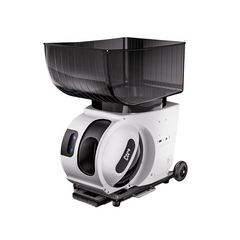
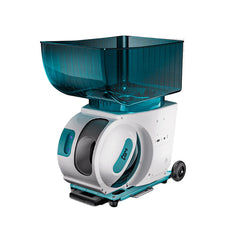
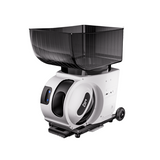
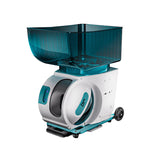
The single biggest leap in pickleball training over the last three years is the AI ball machine. A ball machine for pickleball does exactly what a tennis ball machine does — it fires balls at you at adjustable speeds, intervals, and spin levels — but pickleball machines are tuned for the lighter, smaller ball and the specific shot demands of the sport.
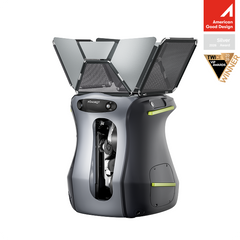
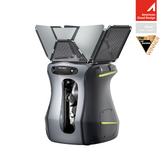
The gold standard right now is the Pongbot Aura — the world's first AI-powered multi-sport ball machine that supports tennis, pickleball, and padel from a single device. Unlike older machines that fire balls in fixed patterns, Aura reads your position on the court using computer vision and adjusts ball speed, placement, and rhythm in real time, much like a human coach would. It can mimic different playing styles, force you to cover ground, and keep you in rally situations that feel like a real match.
The Pongbot Aura adapts to your skill level and sport — tennis, pickleball, or padel. Browse the Aura →
Aura delivers ball feeds at up to 80 mph and connects to an app where you can design custom drills or pull from a library of pro-designed sessions. For pickleball specifically, that means working on third-shot drops, dink exchanges, and approach shots with machine-level consistency — something a wall or a simple lob machine simply can't replicate.
Other options in this category worth noting: the Franklin ProShot Pickleballer (compact, affordable, two-speed settings), the Lobster Pickle Two (well-established in the tennis world, also used for pickleball), and the Pickleball Tutor Plus (widely reviewed as one of the most realistic pickleball-specific machines available). Each serves a different budget and commitment level, but the common thread is this — if you want hundreds of quality reps per session without organizing a practice partner, a ball machine is non-negotiable.
---Pickleball Training Equipment #2: Rebounder Nets and Wall Trainers
Rebounder nets are the backbone of solo pickleball training. Hit a ball into the net, it bounces back to you, and you hit it again. No partner, no court booking, no waiting. The ball comes back at roughly the same pace and angle you sent it, which makes rebounder nets excellent for drilling forehands, backhands, and volleys with high repetition.
There are two main formats:
- Portable rebound nets — typically 4 to 7 feet wide and adjustable in angle. The OnCourt OffCourt Rebounder Deluxe is one of the largest on the market at 7 feet wide, which means you can even simulate wide receiver-style side-to-side movement during drills. Lockable wheels make it portable enough to move from garage to backyard. The Net Playz 6-Foot Pickleball Rebounder is a popular mid-size option with an adjustable angle that lets you dial in bounce height.
- Training boards (wall trainers) — these are solid surfaces (typically 4×5.5 feet) with painted target zones. The Dink Master Pro is the most recognized name in this space. You position it at the kitchen line, hit balls at the board, and they come back with a controlled bounce. The board's target zones train accuracy — you learn to hit specific parts of the court rather than just "somewhere over the net." Two-sided models often have a fahtmlst-bounce side for volleys and a slower, more absorbent side for soft-game dink drills.
One thing to know: bare walls work for raw drilling, but they don't absorb impact well and produce unpredictable bounces on balls that hit cracks or uneven surfaces. A purpose-built rebounder or training board gives you consistent, game-quality returns every time.
---Pickleball Training Equipment #3: Training Paddles and Sweet Spot Trainers
A standard pickleball paddle is optimized for game performance — but a training paddle is optimized for skill development, and those are two different goals. Training paddles typically add weight, alter the sweet spot location, or include visual guides built into the paddle face to train muscle memory.
The Franklin Sweet Spot Training Paddle is widely reviewed as one of the best in this category. Built with a T700 carbon fiber face and a 16mm polymer core, it's heavier than a typical paddle and has a deliberately positioned sweet spot that trains you to hit the center of the paddle every time. Inconsistent contact is one of the most common fixes recreational players need to make, and a training paddle addresses it by making off-center hits feel noticeably worse — your hand tells you immediately when you missed the sweet spot.
Bullseye Trainer Paddles work on the same principle with a precision target overlay on the paddle face — a set of concentric circles that give you a visual reference for where you're making contact. These are especially useful for players working on serve accuracy or learning to place shots rather than just hit hard.
The key thing with training paddles: they're not for playing matches. Rotate them into your practice sessions a few times a week to build the muscle memory, then switch back to your game paddle. Over time, the sweet spot awareness transfers permanently.
---Pickleball Training Equipment #4: Silent Practice Balls

One of the biggest obstacles to consistent solo training is noise — pickleball balls are hollow plastic and they crack loudly when they hit a hard surface. This limits when and where you can practice, especially if you live in an apartment or have neighbors close by.
Silent practice balls solve this completely. The Enhance Pickleball Ninja-Ball is the category benchmark — it's a foam pickleball with the exact same size, weight, and bounce as a standard outdoor ball, but it's nearly silent on impact. You can drill in a living room, garage, office, or apartment without anyone knowing you're there.
The practical value is enormous. Silent balls mean you can fit in a 20-minute drill session during a lunch break, early morning, or late evening without respecting noise hours. You don't have to wait for the court to be free or for your partner to be available. Some players keep a bucket of silent balls at their desk and hit a few serves between calls. That kind of frictionless,随时随地 practice is what separates players who improve quickly from those who plateau.
---Pickleball Training Equipment #5: Footwork Ladders and Agility Tools
Pickleball rewards footwork more than most recreational players realize. The kitchen line is a high-stakes zone where split-second positioning determines whether you win or lose the point. Lateral quickness, crossover steps, and ready-position recovery all matter — and none of them are trained by simply hitting balls.
An agility ladder — the same flat ladder mat used in tennis, basketball, and soccer training — is one of the most effective (and affordable) tools for improving foot speed. Set it up in your driveway or garage and run through footwork patterns: lateral high-knee runs, side shuffles, crossover steps, forward-backward sprints. Ten minutes a day on an agility ladder improves your ability to reset after each shot, get to the kitchen line faster, and recover position between exchanges.
Cone markers are the other staple. Place four or five cones at the angles you'd receive a return and practice your first three steps to each one. This trains court coverage and helps you develop an athletic ready position rather than standing flat-footed waiting for the ball.
Combine a rebounder net with an agility ladder and you have a complete solo training station in a garage or backyard. No court needed.
For something slightly more structured, the Z-Ball (a small reaction ball) bounces at unpredictable angles when thrown against the ground or a wall, forcing you to react and adjust — excellent for training reflexes at the kitchen line.
---Pickleball Training Equipment #6: Pickleball-Specific Ball Hoppers
A ball hopper seems mundane, but if you're doing high-volume drilling, the last thing you want is to spend half your session bending over to collect balls. A good hopper holds 50 to 100 balls and lets you scoop them up quickly.
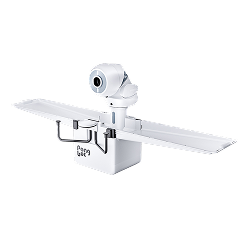
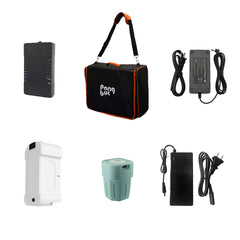
The Pongbot Tennis Ball Picker is worth noting even for pickleball players — it's designed to handle balls from 40mm to 80mm, which means it works with standard pickleball balls (the same machine is marketed across tennis, pickleball, and padel). It holds up to 18 balls and uses a one-touch collection mechanism that gathers balls efficiently without damaging them. For court-based practice where you're feeding from a basket, a simple wire or mesh hopper in the 40-to-80-ball range keeps your drill flow uninterrupted.
Browse the full range of tennis and table tennis accessories to build out your training setup — ball pickers, carrying bags, and court-side tools all add up to a more efficient practice session.
---Pickleball Training Equipment #7: Serve Trainers and Grip Tools
The serve is the only shot in pickleball you fully control — and most recreational players' serves are undertrained. A few specific tools help.
Grip trainers like the Pickleball Grip Doctor fit over your paddle handle and physically condition your hand into the correct grip orientation. Grip issues are insidious — you don't notice them until your wrist starts hurting or your spin serve loses bite — and a grip trainer corrects them by making the wrong grip uncomfortable.
Serve targets are simpler: a raised net section or a painted zone on a training board that you aim at. Some players hang a hula hoop over the net; others use adhesive court tape on a garage wall. The goal is to give yourself immediate feedback on serve placement. A serve that lands three feet past the baseline is technically in — but a serve that clips the corner of the service box wins more points. Target training builds that precision.
---Pickleball Training Equipment #8: Mini Courts and Portable Nets
You don't always have access to a full-size pickleball court — but you can replicate the kitchen line and baseline geometry almost anywhere with a portable net system and measuring tapes or guide straps.
The JOOLA Pro Dink Net measures 5.5 feet wide and 36 inches tall (regulation pickleball net height) and sets up in minutes. It has a magnetic base that lets you connect multiple units together to create longer drill corridors or side-by-side partner setups. Pair it with pre-measured kitchen line straps (some kits include them) and you have a regulation-size court in a driveway or a gym.
For solo dink work, the Enhance Pickleball Mini Court is a half-sized net system with Velcro straps that mark the kitchen line. It's designed for two players doing partner drills at home — dink exchanges, third-shot drops, and kitchen-line footwork — without needing to set up a full court.
---Pickleball Training Equipment #9: Spin Training Tools
Spin is one of the most underused weapons in recreational pickleball, largely because players don't develop feel for it. Several training tools specifically address this.
TopspinPro (available for tennis but the mechanics directly apply) is a ball machine variant that emphasizes heavy topspin feeds, helping players learn to read spin on incoming balls and develop the wrist and forearm mechanics to produce it. For pickleball, where sidespin on serves and backspin on resets are tactically very important, working with a machine that produces consistent spin trains your eyes and hands to read and produce it.
If you're looking to bring spin-specific training into your setup, explore the table tennis collection — Pongbot's table tennis robots offer some of the most precise spin control available across any ball sport, and the feel translates directly to pickleball reset and serve mechanics.
Spin balls (training balls with exaggerated spin applied during manufacturing) are another option — you hit them and immediately feel the difference in torque on the paddle. They're cheap, portable, and useful for feedback-driven practice.
---Pickleball Training Equipment #10: Dink Boards and Soft-Game Trainers
The dink — that soft, controlled shot that drops the ball just over the net in the kitchen — is arguably the highest-skill shot in pickleball and the one most players avoid because it feels uncomfortable to practice. Dink boards are purpose-built to solve this.
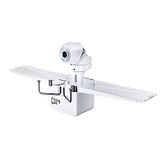
The Dink Master 3.0 (from Enhance Pickleball) is the current benchmark. It's a 4×5.5-foot training board with two distinct rebound surfaces: a fast-bounce side for volley and drive drills, and a slower, more absorbent side specifically calibrated for soft dink exchanges. The board tilts to adjust ball trajectory, and a detachable mini net converts it from a solo wall into a two-player drill station.
The key benefit: the Dink Master doesn't just return the ball — it returns it at pickleball-appropriate speeds and angles, forcing you to absorb pace and control the ball like you would in a real kitchen-line exchange. That feel is nearly impossible to replicate against a wall or with a simple rebounder net.
---
 Pickleball Training Equipment #11: Smartphone Apps and AI Coaching Software
Training equipment isn't always physical. AI coaching apps have become genuinely useful in the last two years, especially for players who don't have access to a coach.
CoachMyBird (for badminton, but increasingly referenced by pickleball coaches) and several pickleball-specific apps now offer video analysis where you film your serve or swing and get AI-generated feedback on mechanics, grip, and follow-through. Some apps can detect ball trajectory and footwork patterns from phone video.
The Pongbot app — which controls the Aura machine — also doubles as a drill library and session tracker. You pick a drill, the machine executes it, and the app logs your performance over time. This creates a feedback loop: you know whether your dink accuracy is improving week over week because the data is right there in the app.
---Conclusion
Pickleball training equipment runs the gamut from $10 cone markers to $1,500 AI ball machines — and honestly, both ends of that spectrum are worth it. The best players in the world train with machines that adapt to their level. The fastest-improving recreational players are the ones stacking solo reps between court sessions with a rebounder board, an agility ladder, and a bucket of balls.
If you're going to invest in one piece of equipment, make it the ball machine — specifically the Pongbot Aura, which handles tennis, pickleball, and padel from a single device and adjusts to your level as you improve. Everything else supports that: a rebounder net for high-volume drilling, a training paddle for sweet-spot mechanics, a silent ball set for apartment-friendly reps.
Start Training: Explore the Pongbot Aura and full lineup at store.pongbotsports.com →
Recommended Read
---FAQ: Pickleball Training Equipment
What is the best pickleball ball machine for solo practice?
The Pongbot Aura is currently the most advanced option — it's an AI-powered multi-sport machine that supports pickleball, tennis, and padel, reads your court position, and adjusts ball speed and placement in real time. For a more budget-friendly option, the Franklin ProShot and Pickleball Tutor Plus are both well-reviewed.
Can I practice pickleball at home without a court?
Yes. Silent practice balls (like the Enhance Ninja-Ball), a training paddle, and a rebounder board or dink trainer can all be used in a garage, driveway, or even a living room. Portable nets and kitchen-line marker straps let you set up a mini court for partner drills almost anywhere.
What equipment do professional pickleball players use to train?
Pros use a mix of AI ball machines (for high-volume rally reps), rebounder nets and dink boards (for solo drilling), training paddles (for sweet-spot mechanics), and footwork tools like agility ladders and cone markers. Many also work with video analysis apps and AI coaching software between on-court sessions.
How much should I spend on pickleball training equipment?
A ball machine is the biggest investment — from around $200 for an entry-level model to $1,500+ for an AI machine like Aura. A quality rebounder net runs $100–$400, a training paddle $40–$120, and an agility ladder $15–$50. You can build a solid solo training setup for under $300.
Does a pickleball ball machine actually help improve your game?
Yes — consistently. Ball machines provide repetition and rhythm that you simply can't replicate with a practice partner. You control the pace, the drill, and the volume. Research on skill acquisition across racket sports shows that high-repetition, variable-speed training (exactly what a machine provides) accelerates motor learning significantly compared to match play alone.
What is a dink board and do I need one?
A dink board (like the Dink Master 3.0) is a portable training board designed specifically for kitchen-line soft-game practice. It absorbs pace and returns the ball at realistic dink speeds, which a wall or standard rebounder can't do. If you're working on your soft game, drop shots, or kitchen-line exchanges, it's one of the most effective tools available.


